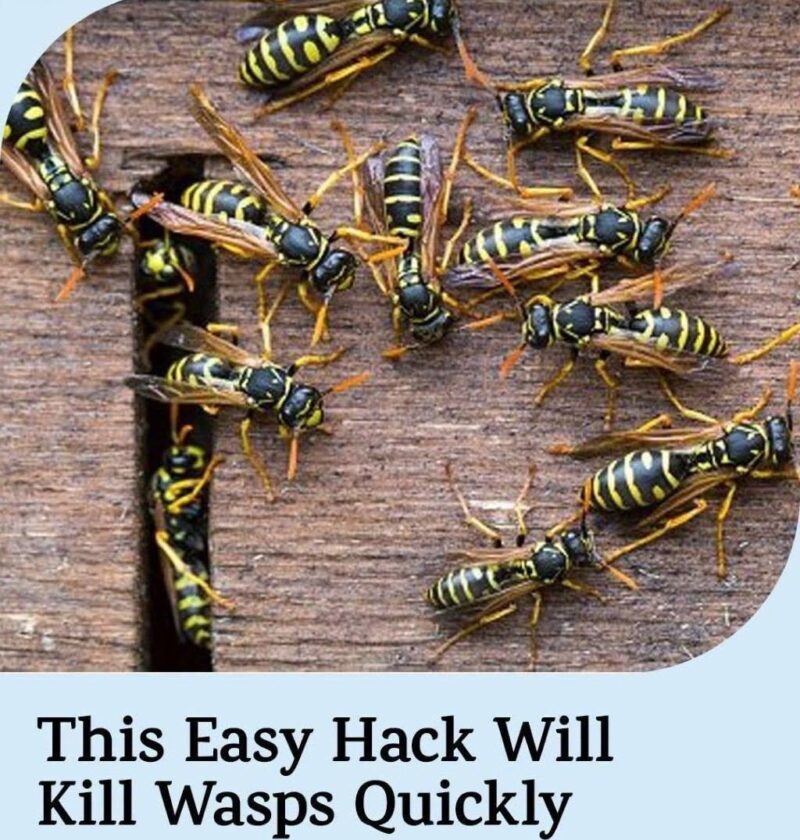
This Easy DIY Natural Wasp Killer Hack Will Kill Wasps Quickly
Wasps can quickly turn a peaceful outdoor day into a stressful experience. Whether they appear around your garden, patio, balcony, or trash area, their painful stings make many people look for simple ways to keep them away.
While commercial insect sprays are widely available, some people prefer natural or homemade methods that use common household ingredients. One popular DIY approach combines simple materials to create a solution that may help control wasps around certain areas of your home.
Before trying any method, remember that wasps play an important role in nature by controlling other insect populations and helping with pollination. The goal should be to manage unwanted activity safely, especially when nests are nearby.
A Simple Homemade Wasp Control Solution
One commonly used DIY mixture involves ingredients that many people already have at home:
What You Need:
- A spray bottle
- Water
- Dish soap
- A small amount of vinegar (optional)
How to Make It:
- Fill a spray bottle with water.
- Add a few tablespoons of dish soap.
- Add a small amount of vinegar if desired.
- Shake gently to mix the solution.
The soap helps reduce the surface tension of water, allowing it to coat insects more effectively. When sprayed directly on individual wasps, soapy water may interfere with their ability to breathe through their outer body openings.
How to Use It Safely
If you see a single wasp near your home, you can apply the solution from a safe distance. Avoid getting too close, making sudden movements, or disturbing a group of wasps.
For best results:
- Spray only when you can do so safely
- Wear protective clothing if necessary
- Keep children and pets away from treated areas
- Avoid spraying large numbers of wasps at once
What About Wasp Nests?
A homemade spray may not be the best choice for dealing with an active nest. A colony can contain many defensive wasps, and disturbing a nest may lead to aggressive behavior.
If a nest is large, located near an entrance, or causing a safety concern, professional pest control may be the safer option.
Natural Ways to Discourage Wasps
In addition to direct control methods, you can make your property less attractive to wasps:
Keep Food Covered
Sweet drinks, fruit, and leftover food can attract wasps. Cover outdoor food and clean spills quickly.
Secure Trash Bins
Garbage containers with food residue can become a major attraction. Keep lids tightly closed and clean bins regularly.
Remove Fallen Fruit
Rotting fruit from trees can attract insects, including wasps. Clearing it from your yard can reduce activity.
Seal Entry Points
Check around windows, doors, roofs, and walls for gaps where wasps may build nests.
Use Plants Strategically
Some plants are traditionally believed to discourage certain insects, though their effectiveness varies. Keeping your outdoor space clean and well-maintained is usually more reliable.
Preventing Future Wasp Problems
The best way to deal with wasps is often prevention. Inspect outdoor areas regularly, especially during warmer months when wasps become more active.
Look for early signs of nest building, such as small paper-like structures under roof edges, sheds, fences, or sheltered corners.
Final Thoughts
A simple homemade soapy water spray is one of the many DIY methods people use to manage individual wasps. It may be useful for small, isolated problems, but it is not a substitute for safe handling of large nests or aggressive colonies.
The safest approach is to understand the situation, avoid unnecessary risks, and choose a solution that protects both people and the environment.