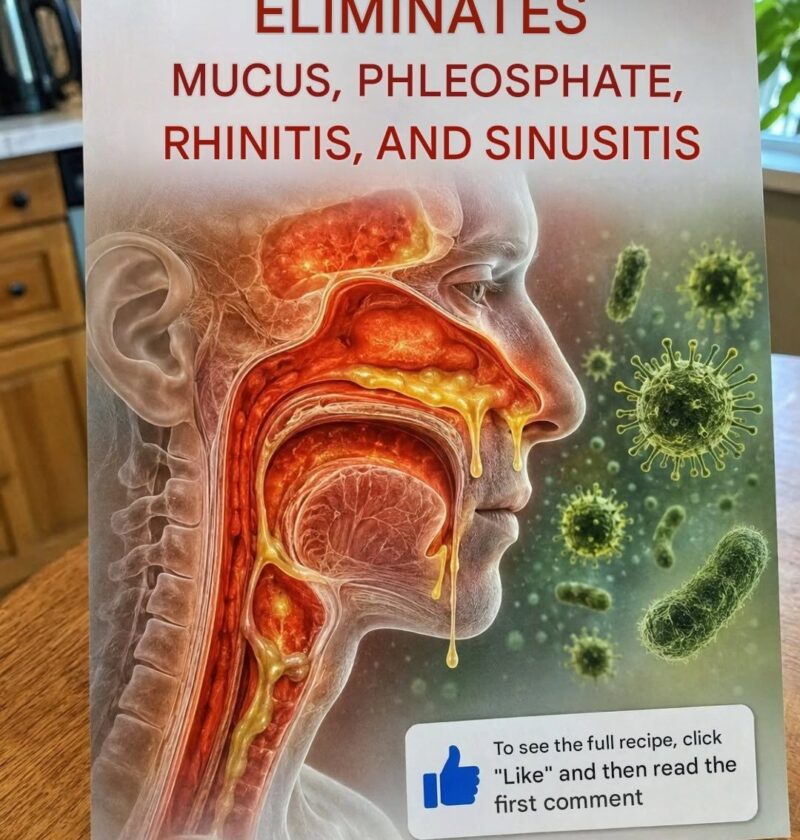
That headline is a common example of a viral health claim. Without seeing the actual remedy, it’s impossible to know whether it works, but it’s worth being skeptical of phrases like “surprises everyone” or “simple cure”.
What can help with mucus, phlegm, and rhinitis?
For symptoms related to colds, allergies, or mild upper respiratory irritation, some measures have evidence for symptom relief:
- Stay hydrated: Drinking fluids can help keep mucus thinner.
- Saline nasal irrigation: Saltwater nasal sprays or rinses can help clear nasal passages and reduce congestion.
- Humidified air or steam: May provide temporary relief of nasal irritation and thick mucus.
- Honey (for adults and children over 1 year): Can soothe the throat and reduce coughing.
- Avoid irritants such as cigarette smoke.
What about “natural remedies”?
Many recipes contain ingredients such as:
- Ginger
- Honey
- Lemon
- Garlic
- Herbal teas
These may help some people feel better or soothe symptoms, but they generally do not cure the underlying cause of rhinitis, especially if it’s due to allergies or infection.
When to seek medical advice
If you have:
- Symptoms lasting more than a few weeks
- High fever
- Shortness of breath
- Wheezing
- Facial pain or swelling
- Bloody mucus
it’s a good idea to seek medical evaluation.
Bottom line
There is no single home remedy proven to reliably eliminate mucus, phlegm, or rhinitis for everyone. Some simple measures can help relieve symptoms, but the effectiveness depends on the underlying cause.
If you share the actual recipe or remedy from the article, I can explain what each ingredient does and whether the claims are supported by evidence.