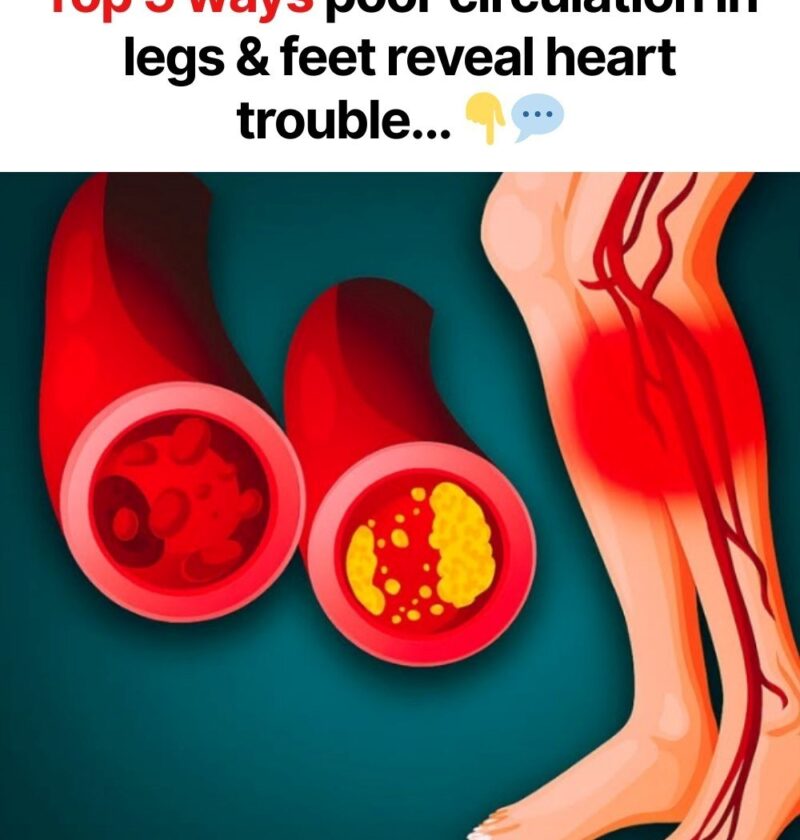
Poor circulation in the legs and feet can sometimes be an early clue that blood vessels are affected by more widespread cardiovascular disease, especially conditions like Peripheral artery disease and underlying Coronary artery disease. The connection is that the same process—atherosclerosis (plaque buildup)—often affects arteries throughout the body, not just one area.
Here are the top 5 ways this shows up in the legs and feet:
1) Pain or cramping while walking (claudication)
If you get aching, tightness, or cramping in your calves, thighs, or buttocks when walking that improves with rest, it often suggests reduced arterial blood flow. This is one of the most classic signs that leg circulation is compromised and may reflect systemic artery disease linked to the heart.
2) Cold feet or color changes
Feet that are consistently colder than the rest of your body, or that turn pale, bluish, or purplish, can indicate reduced oxygen-rich blood reaching the lower limbs. This can happen when arteries are narrowed, which often coexists with heart-related vascular disease.
3) Slow-healing wounds or ulcers
Cuts, blisters, or sores on the feet that take unusually long to heal—or keep coming back—suggest poor tissue oxygenation. This is a warning sign of significant circulation problems and is strongly associated with advanced peripheral arterial disease and higher cardiovascular risk.
4) Weak or absent pulses in the feet
Doctors often check pulses on the top of the foot and behind the ankle. If these pulses are weak or hard to feel, it can indicate narrowed or blocked arteries. This finding often signals widespread vascular disease, not just a local leg issue.
5) Numbness, tingling, or fatigue in the legs
A “heavy,” tired feeling in the legs even with mild activity—or numbness/tingling at rest—can occur when blood flow is insufficient. In more advanced cases, pain may also appear when the legs are elevated, reflecting severely reduced circulation.
Important context
Not every circulation symptom means heart disease, but persistent or worsening signs—especially combined with risk factors like smoking, diabetes, high blood pressure, or high cholesterol—should be evaluated. Poor leg circulation can be an early warning system for broader vascular disease, including heart and brain arteries.
If you want, I can also break down early vs late symptoms, or explain how doctors test circulation in clinic (ABI test, Doppler ultrasound, etc.).