That headline is partly true in a limited, practical way, but it’s also exaggerated for clicks.
What vinegar can actually do
Household vinegar (usually white distilled vinegar) can help in laundry because it:
- Breaks down detergent residue
- Helps reduce musty odors
- Can soften towels slightly by removing buildup
- May brighten whites a bit by clearing film, not bleaching stains
So yes—vinegar can improve “whites” and towel feel indirectly, but it is not a bleach or miracle whitener.
The “right way” (safe use)
If you want to use it properly:
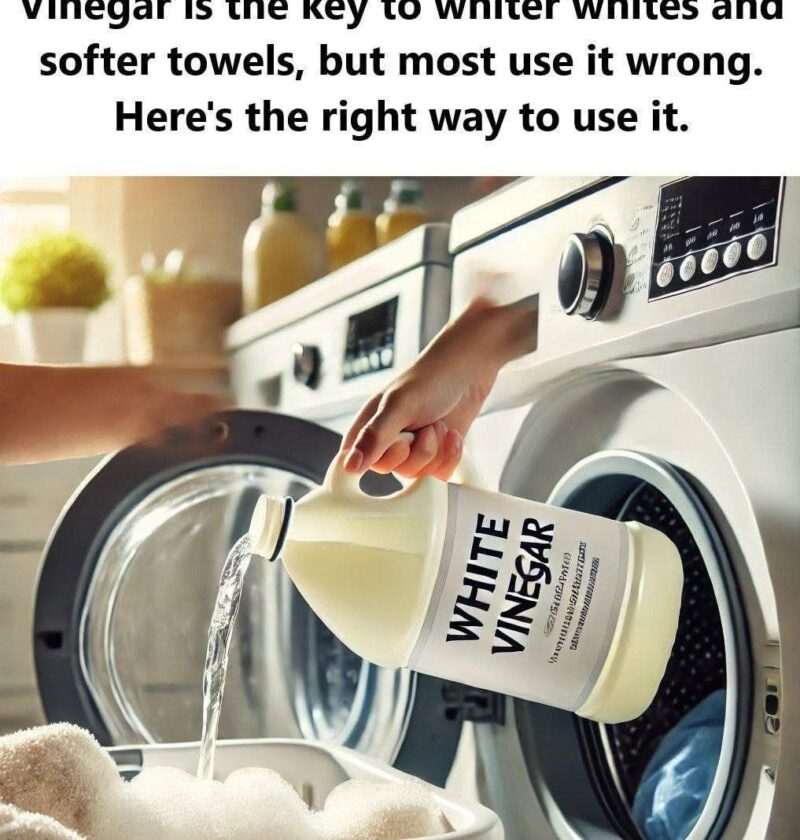
- Add ½ to 1 cup of white vinegar to the fabric softener compartment
- Use it during the rinse cycle, not the wash cycle with detergent
- Wash whites normally with regular detergent first
Common mistakes (what people do wrong)
- Mixing vinegar directly with bleach → dangerous chlorine gas
- Using too much vinegar → can weaken some rubber seals over time
- Expecting it to remove tough stains → it won’t replace detergent or stain removers
- Soaking delicate fabrics too often → can affect some fibers over time
What vinegar does NOT do
- It does not “deep clean” like detergent
- It does not disinfect in a reliable, hospital-grade way
- It does not replace bleach for whitening heavily stained whites
Bottom line
Vinegar is a helpful laundry additive, mainly for odor control and residue removal—not a powerful whitening agent. The “secret hack” framing is overstated, but the basic use is legitimate.
If you want, I can compare vinegar vs baking soda vs commercial fabric softeners so you know when each actually works.