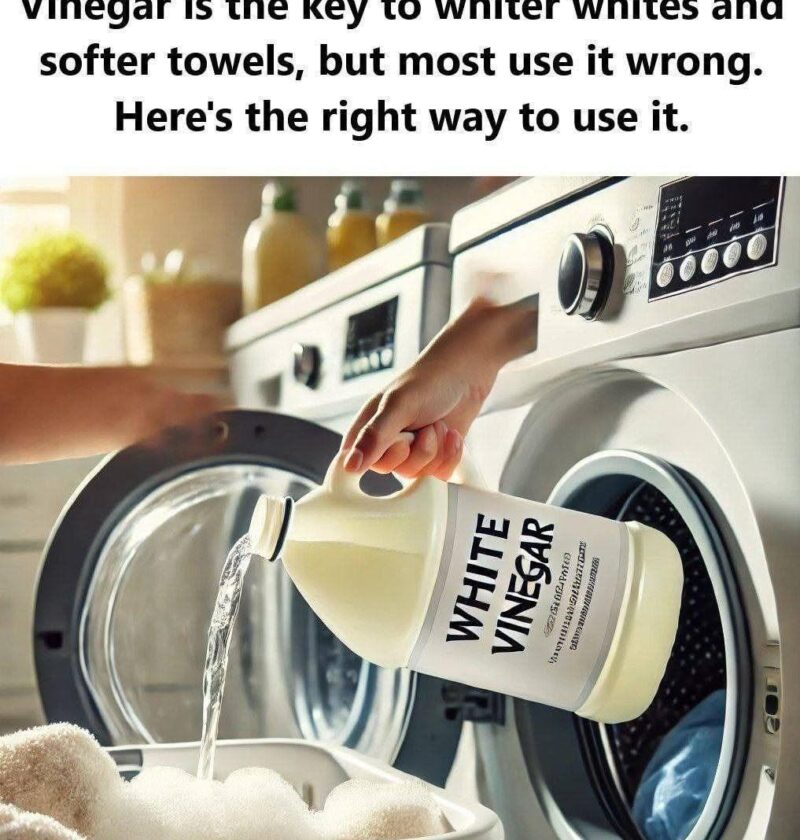
White vinegar (acetic acid diluted in water) is one of those old-school laundry “hacks” that actually works—but most people misuse it, which is why they think it does nothing or even ruins clothes.
Here’s what vinegar really does for laundry, and the correct way to use it.
Why Vinegar works in laundry
White vinegar isn’t a bleach or detergent substitute. Instead, it helps by:
- Breaking down detergent residue that builds up on fabric over time
- Dissolving mineral deposits from hard water (which makes whites look dull)
- Neutralizing odors instead of masking them
- Softening fibers naturally (especially towels)
- Reducing stiffness and “scratchy towel” feel
The key idea: vinegar cleans buildup, it doesn’t “whiten” like bleach.
The most common mistakes people make
1. Pouring it directly on clothes
This can leave uneven effects or weaken delicate fibers if overused in one spot.
2. Mixing it with bleach
This is dangerous. Vinegar + chlorine bleach can release toxic chlorine gas.
3. Using too much
More vinegar does NOT mean cleaner laundry. It can stress rubber seals in washing machines over time if overused.
4. Replacing detergent with vinegar
Vinegar is a booster, not a detergent replacement.
The correct way to use vinegar
✔ For whiter whites
Add ½ to 1 cup of white vinegar into the fabric softener compartment during the rinse cycle.
- Helps remove dulling residue
- Restores brightness over time (not instantly like bleach)
✔ For softer towels
Add ½ cup of vinegar during the rinse cycle every few washes.
Then:
- Skip commercial fabric softener (it actually makes towels less absorbent)
- Wash towels separately for best results
✔ For odor removal (sports clothes, socks, etc.)
Pre-soak in:
- 1 part vinegar
- 4 parts water
for 30–60 minutes before washing normally.
✔ For washing machine cleaning
Run an empty hot cycle with:
- 1–2 cups of vinegar
This helps remove soap scum and odor buildup inside the drum.
Pro tips most people miss
- Don’t combine vinegar with fabric softener (they cancel each other out)
- It works best with regular use over time, not one wash
- Always use white distilled vinegar, not apple cider or flavored vinegar
- For very yellowed whites, vinegar alone won’t fix it—you may need oxygen-based bleach
Bottom line
Vinegar doesn’t magically “whiten” clothes—it removes the invisible buildup that makes whites look dull and towels feel rough. Used correctly, it’s one of the simplest and cheapest laundry upgrades you can make.
If you want, I can also show you a full “perfect laundry routine” that combines vinegar, detergent, and washing settings for consistently brighter clothes.