That headline is partly true but exaggerated.
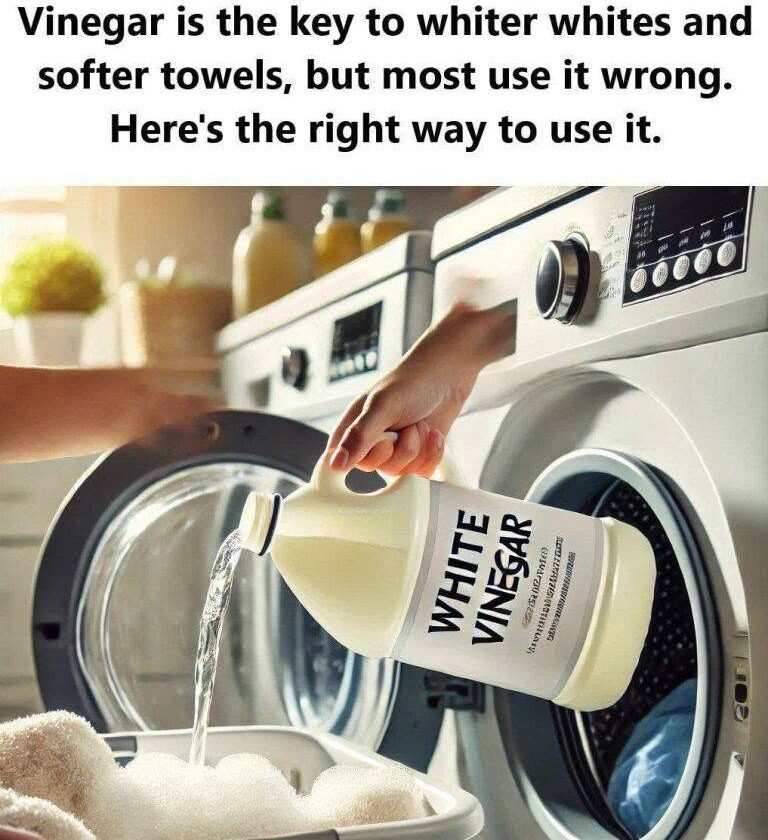
Vinegar (usually white vinegar) can help laundry in specific ways—but it’s not a miracle “whitening agent,” and using it incorrectly can actually reduce detergent effectiveness.
🧺 What vinegar actually does in laundry
White vinegar is a mild acid. In washing machines it can:
- Help remove odor buildup
- Break down detergent residue
- Soften fabrics slightly by reducing mineral buildup
- Help towels feel less stiff over time
It does not truly bleach or “whiten” like chlorine bleach.
⚠️ Common mistakes people make
❌ 1) Mixing vinegar with bleach
This creates toxic chlorine gas. Never combine them.
❌ 2) Replacing detergent with vinegar
Vinegar does not clean grease, oils, or heavy dirt effectively.
❌ 3) Using too much vinegar
Overuse can:
- weaken some elastic fibers over time
- damage rubber parts in some washing machines (if used constantly in high amounts)
✔️ The correct way to use vinegar in laundry
🧼 For soft towels
- Add ½ cup white vinegar to the fabric softener compartment
- Do NOT mix with detergent in the main wash
👕 For odor removal
- Add vinegar during the rinse cycle
- Helps remove sweat and mildew smells
🧽 For buildup (occasional use)
- Run an empty hot wash with vinegar to clean machine residue (once in a while only)
🧠 Why towels feel “rough” in the first place
Most stiffness comes from:
- detergent buildup
- hard water minerals
- overuse of fabric softener
Related condition: Dermatitis (only indirectly related when skin irritation happens from residue, not towels themselves)
🧠 Bottom line
Vinegar can help reduce odor and residue, making towels feel softer—but it is not a whitening bleach or full detergent replacement.
If you want, I can give you a simple “best laundry routine” that actually keeps whites bright and towels soft without damaging your clothes or machine.