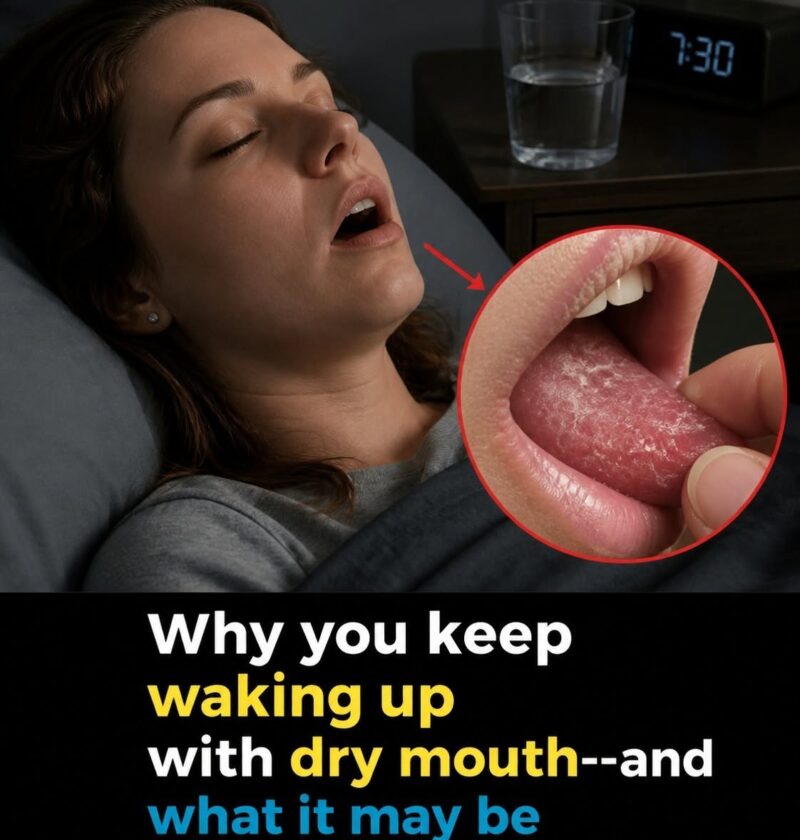
Dry mouth happens when your saliva production drops overnight or your mouth stays open during sleep.
1) You may be breathing through your mouth
This is the most common cause.
It often happens due to:
- Blocked nose (allergies, sinus issues, cold)
- Sleeping position
- Habitual mouth breathing during sleep
When air flows through the mouth, it dries out saliva quickly.
2) Possible sleep breathing disorder
In some cases, mouth breathing and dry mouth are linked with snoring or interrupted breathing, such as Obstructive Sleep Apnea.
Other signs include:
- Loud snoring
- Morning headaches
- Daytime fatigue
- Poor sleep quality
3) Dehydration
If you don’t drink enough fluids during the day—or lose more through:
- Hot weather
- Caffeine
- Alcohol
Your body produces less saliva at night.
4) Medications
Many common medicines can reduce saliva, including:
- Antihistamines
- Antidepressants
- Blood pressure drugs
This can make morning dryness worse.
5) Dry environment
Air conditioning, heaters, or low humidity can dry out the air you breathe while sleeping.
When it matters more
Occasional dry mouth is not serious. But it’s worth paying attention if:
- It happens every morning
- You snore heavily
- You feel tired despite sleeping
- You wake up gasping or choking
Simple things that help
- Drink water regularly during the day
- Try nasal breathing support (saline spray if congested)
- Avoid very dry rooms (use a humidifier if needed)
- Limit caffeine late in the day
- Sleep on your side if snoring is an issue
Bottom line
Waking up with dry mouth is usually a sign of mouth breathing, dehydration, or poor sleep quality, and sometimes it can point toward sleep-related breathing issues like Obstructive Sleep Apnea.
If you want, tell me whether you snore or feel tired in the morning—I can help narrow down the most likely cause in your case.