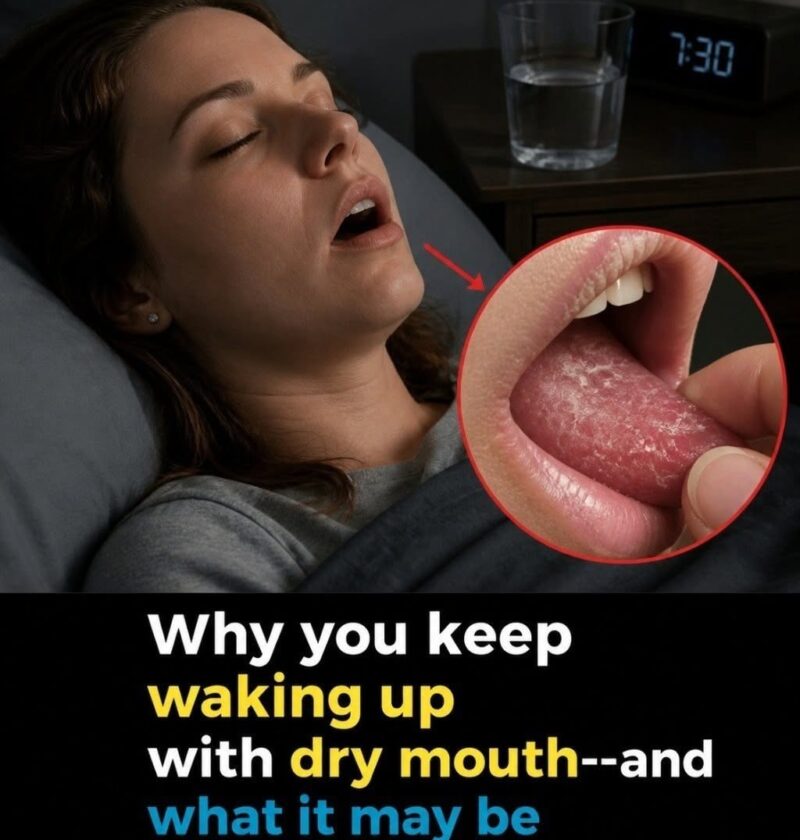
Waking up with a dry mouth is common, but it can sometimes be a clue that something is affecting your hydration, breathing, medications, or oral health.
Possible reasons include:
- Breathing through your mouth while sleeping: This can happen with a blocked nose, allergies, sinus problems, or sleeping with your mouth open.
- Snoring or sleep-related breathing issues: A dry mouth in the morning is often reported by people who snore. In some cases, it can be associated with Obstructive sleep apnea, where breathing repeatedly becomes interrupted during sleep.
- Dehydration: Not drinking enough fluids, sweating at night, or consuming alcohol can contribute.
- Medications: Many medicines can reduce saliva production, including some allergy medicines, antidepressants, and blood pressure medications.
- Oral health issues: Reduced saliva can increase the risk of bad breath, cavities, and gum problems.
What you can try:
- Drink enough water throughout the day.
- Avoid alcohol and excessive caffeine close to bedtime.
- Use a humidifier if your bedroom air is dry.
- Address nasal congestion if you regularly breathe through your mouth.
- Maintain good brushing and flossing habits.
Consider talking to a healthcare professional if:
- Dry mouth is persistent or severe
- You have loud snoring, choking/gasping during sleep, or excessive daytime sleepiness
- You have trouble swallowing, mouth sores, or frequent cavities
- You feel unusually thirsty or are urinating much more than usual
A dry mouth once in a while is usually harmless, but a recurring pattern can be worth investigating.