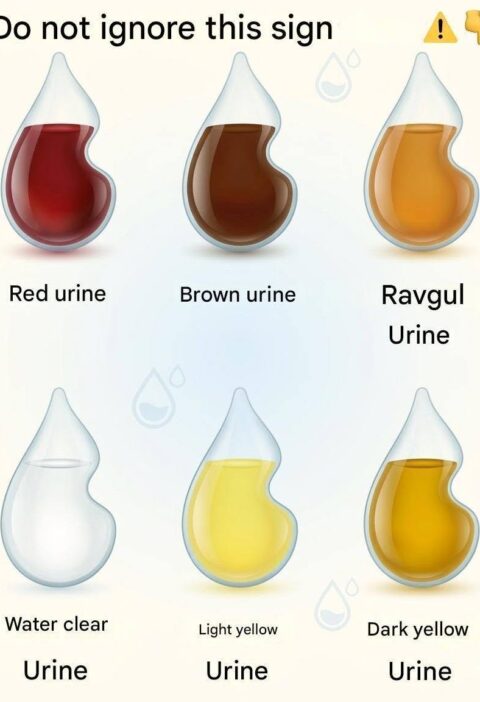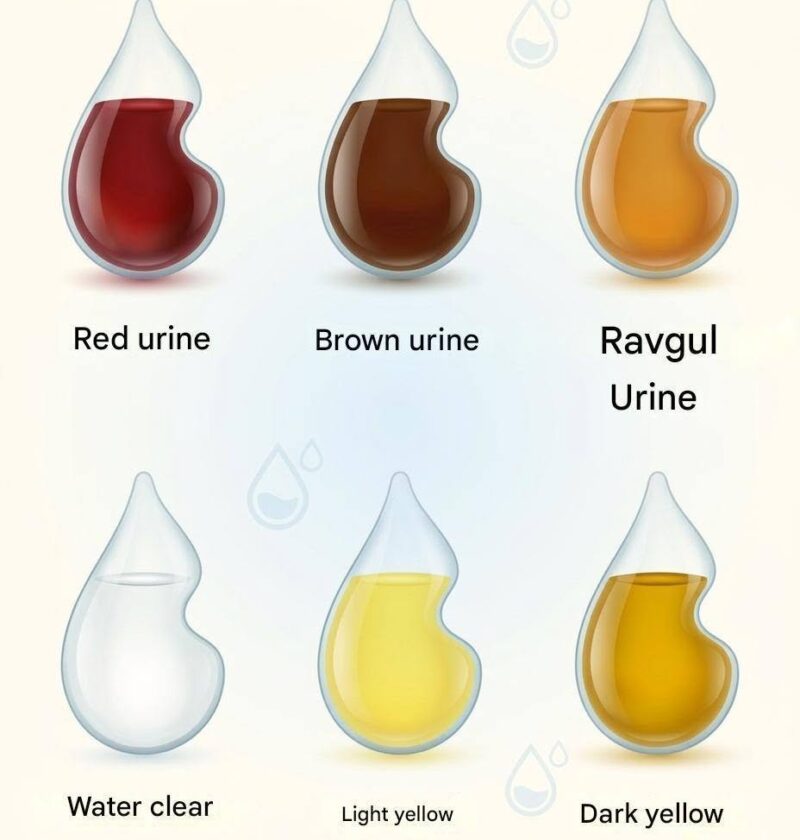
Urine color can be a surprisingly useful indicator of what’s going on in your body—especially hydration and sometimes underlying health issues. Here’s a practical guide from most common to more concerning colors:
💛 1) Pale straw / light yellow (ideal)
This usually means you’re well hydrated and your kidneys are functioning normally.
🌼 2) Dark yellow / amber
Often a sign of mild dehydration. Your urine is more concentrated because your body is conserving water.
🧡 3) Honey or orange
Can indicate:
- Dehydration
- Certain medications (like some antibiotics or laxatives)
- In some cases, liver or bile duct issues (especially if paired with yellowing eyes/skin)
❤️ 4) Pink or red
Can be harmless or serious:
- Beets, berries, or food dyes
- Menstruation contamination
- But also possible blood in urine (hematuria), which may relate to infections, kidney stones, or other conditions
🩷 5) Brown / cola-colored
May suggest:
- Severe dehydration
- Muscle breakdown (rare but serious)
- Liver disease or excess bilirubin in urine
This one should not be ignored if persistent.
💚 6) Blue or green (rare)
Often caused by:
- Food coloring
- Certain medications
- Rare metabolic or bacterial infections
Usually not dangerous, but unusual enough to notice.
⚪ 7) Cloudy or milky
Can indicate:
- Urinary tract infection (UTI)
- Presence of crystals, pus, or excess proteins
- Sometimes dehydration
⚠️ When to worry
You should seek medical advice if urine color change is:
- Persistent (more than a couple of days without explanation)
- Accompanied by pain, fever, burning, or strong odor
- Red, brown, or cloudy without an obvious dietary cause
🧠 Key idea
Urine color is mostly about hydration, but persistent unusual colors can hint at issues involving the liver, kidneys, or urinary tract.
If you want, I can also explain what urine smell, foam, or frequency changes mean, which are just as informative as color.