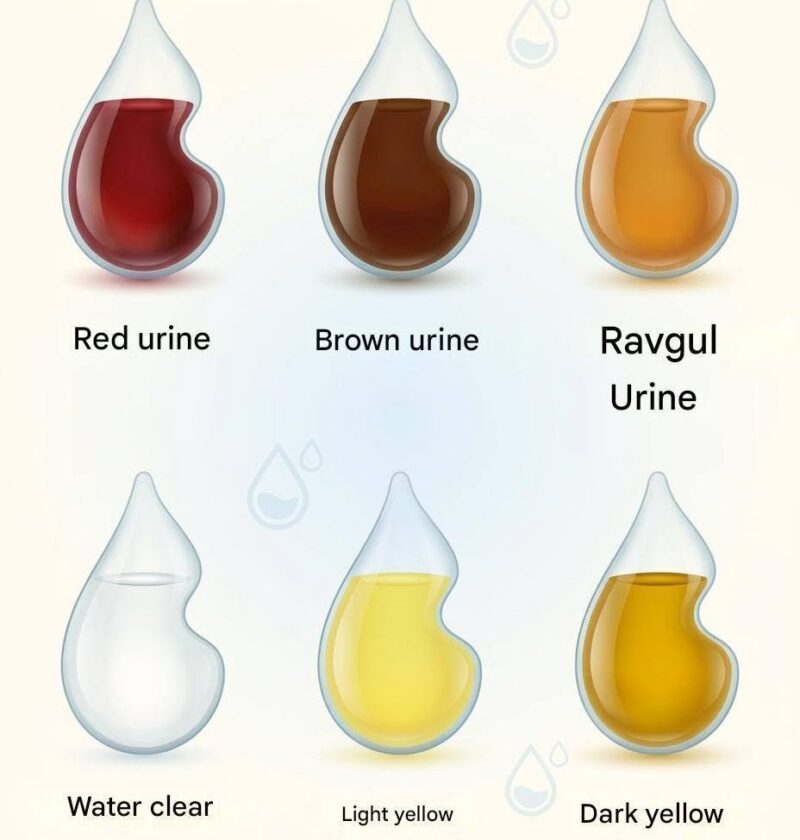
Urine color can provide helpful clues about your hydration, diet, medications, and sometimes your health—but color alone cannot diagnose a medical condition.
Here’s a practical guide:
| Urine color | Common causes | When to seek medical advice |
|---|---|---|
| 🟡 Pale yellow | Normal; good hydration | No concern |
| 💛 Dark yellow/amber | Dehydration, first urine of the morning, some vitamin supplements | If it stays dark despite drinking fluids or you have other symptoms |
| 🟠 Orange | Dehydration, some medications, certain foods; occasionally liver or bile duct problems | If it persists or is accompanied by yellow skin/eyes, abdominal pain, or pale stools |
| 🔴 Pink or red | Beets, blackberries, food dyes, blood in the urine | If you haven’t eaten foods that can cause it, or if you have pain, fever, or blood clots, seek medical care promptly |
| 🟢 Blue or green | Rare; certain medications, food dyes, or uncommon infections | If unexplained or persistent |
| 🟤 Brown or tea-colored | Severe dehydration, liver disease, muscle injury, some foods or medicines | Prompt evaluation is recommended if unexplained |
| ☁️ Cloudy | Dehydration, crystals, urinary tract infection, kidney stones | See a clinician if accompanied by burning, fever, pain, or a strong odor |
Other things to notice
- Strong odor: Can result from dehydration, certain foods (such as asparagus), vitamins, or a urinary tract infection.
- Foamy urine: Occasional foam is usually harmless, but persistent, very foamy urine may warrant evaluation for protein in the urine.
- Frequency: Needing to urinate much more or much less than usual can sometimes indicate a medical issue.
When to seek medical care
Arrange a medical evaluation if you have:
- Blood in your urine
- Persistent brown, red, or orange urine without an obvious dietary cause
- Pain or burning with urination
- Fever, chills, or back pain with urinary symptoms
- Changes in urine color that don’t improve after a day or two of good hydration
Bottom line: Most urine color changes are related to hydration, diet, or medications, but persistent or unusual colors—especially red, brown, or cloudy urine with symptoms—should be assessed by a healthcare professional.