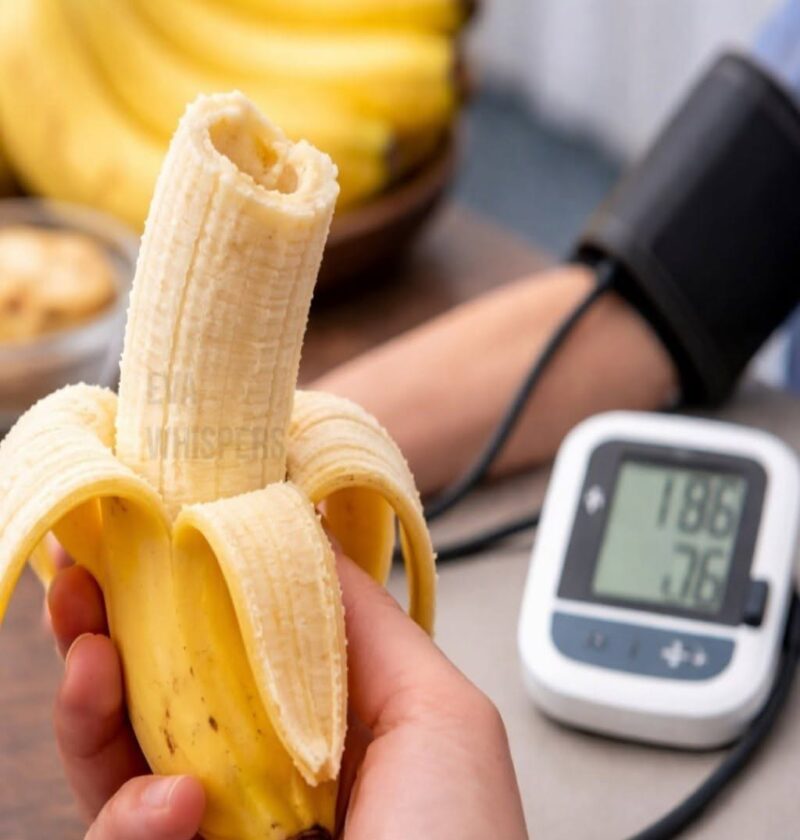
Eating one banana every day may help support healthy blood pressure, but it’s not a guaranteed treatment for high blood pressure.
Here’s why:
- Bananas are rich in potassium. One medium banana contains about 420–450 mg of potassium.
- Potassium helps the body balance sodium and can help relax blood vessel walls, which may contribute to lower blood pressure, especially in people who consume a lot of salt.
- Eating bananas as part of a diet rich in fruits and vegetables—such as the DASH diet—has been shown to help lower blood pressure.
However, there are some important points:
- A single banana a day is unlikely to produce a large drop in blood pressure on its own.
- The biggest benefits come from an overall healthy lifestyle: limiting sodium, eating plenty of fruits and vegetables, maintaining a healthy weight, exercising regularly, and taking prescribed blood pressure medication if needed.
- People with kidney disease or those taking certain medications (such as some potassium-sparing diuretics or ACE inhibitors) should ask their healthcare provider before intentionally increasing potassium intake, because excess potassium can be harmful.
For most healthy adults, eating a banana every day is a nutritious habit and can be one part of a heart-healthy diet, but it should not replace medical treatment for high blood pressure.