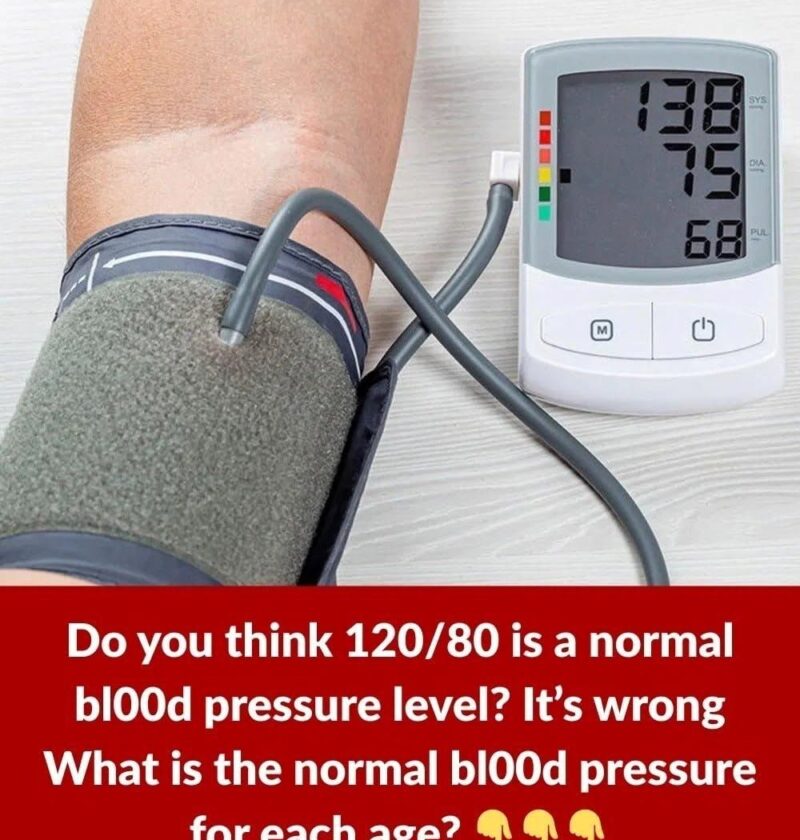
“Normal blood pressure” doesn’t change dramatically by age the way many people think. In modern medicine, the ideal target is mostly the same for adults, with small differences for children and older adults based on health status.
Blood pressure is measured as:
- Systolic (top number)
- Diastolic (bottom number)
🫀 Normal Blood Pressure by Age
👶 Children
- 1–5 years: ~90/60 mmHg
- 6–13 years: ~95–110 / 60–70 mmHg
- Children values vary a lot with height and growth
🧑 Teenagers (14–18)
- Around 110–120 / 65–80 mmHg
- Similar to adults in healthy teens
🧑🦱 Adults (18–59)
- Normal: below 120/80 mmHg
- Elevated: 120–129 / <80
- High blood pressure (Hypertension):
- Stage 1: 130–139 / 80–89
- Stage 2: ≥140 / ≥90
👴 Older adults (60+)
- Common “acceptable” range:
- Around 120–130 / 70–80 mmHg
- Doctors may tolerate slightly higher readings depending on:
- frailty
- dizziness risk
- heart/kidney disease
⚠️ Low blood pressure
- Below 90/60 mmHg
- Called Hypotension
- Only concerning if symptoms occur:
- dizziness
- fainting
- weakness
🧠 Important reality
- “Perfect BP” is not one number for everyone
- One reading is not enough—trend matters more
- Morning, stress, pain, and activity can all change it
🧭 Simple takeaway
- Ideal adult BP: <120/80
- High BP starts at: ≥130/80
- Too low: <90/60 (if symptomatic)
If you want, tell me your age and BP readings, and I can interpret whether they’re normal for your situation.