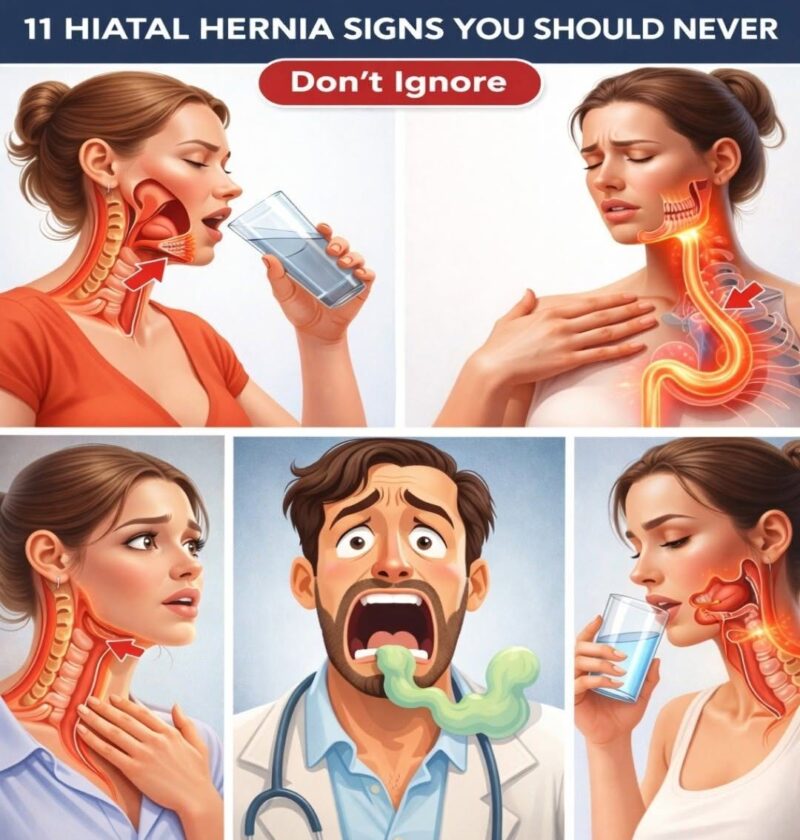
A hiatal hernia occurs when part of the stomach pushes upward through the opening in the diaphragm (the muscle that separates the chest from the abdomen). Some people have no symptoms, while others experience problems related to acid reflux or pressure in the chest.
10 possible signs and symptoms of a hiatal hernia
- Heartburn
- A burning feeling in the chest, often after meals or when lying down.
- Acid reflux
- Stomach acid or food coming back up into the throat or mouth.
- Chest discomfort or pressure
- Pain or discomfort behind the breastbone that may be confused with heart-related pain.
- Difficulty swallowing
- A feeling that food is sticking or moving slowly down the esophagus.
- Frequent burping
- Increased belching or a feeling of trapped gas.
- Bloating or abdominal discomfort
- Fullness or pressure, especially after eating.
- Nausea
- Some people may feel sick or uncomfortable after meals.
- Hoarseness or sore throat
- Acid reaching the throat can irritate the voice box and throat tissues.
- Chronic cough
- Reflux associated with a hiatal hernia can sometimes trigger a persistent cough.
- Feeling full quickly
- Some people experience early fullness or discomfort with meals.
When to seek medical attention
Get medical advice if symptoms are frequent, worsening, or affecting daily life. Seek urgent care for:
- Severe chest pain, especially with sweating, shortness of breath, or pain spreading to the arm/jaw.
- Vomiting blood or passing black, tarry stools.
- Trouble swallowing that is getting worse.
- Unexplained weight loss.
Helpful lifestyle measures (for reflux-related symptoms)
- Eat smaller meals.
- Avoid lying down for 2–3 hours after eating.
- Identify and reduce personal trigger foods (often fatty foods, alcohol, caffeine, or spicy foods).
- Maintain a healthy weight if appropriate.
- Elevate the head of the bed if nighttime reflux is a problem.
Many symptoms of hiatal hernia overlap with other conditions, so a healthcare professional can help determine the actual cause.