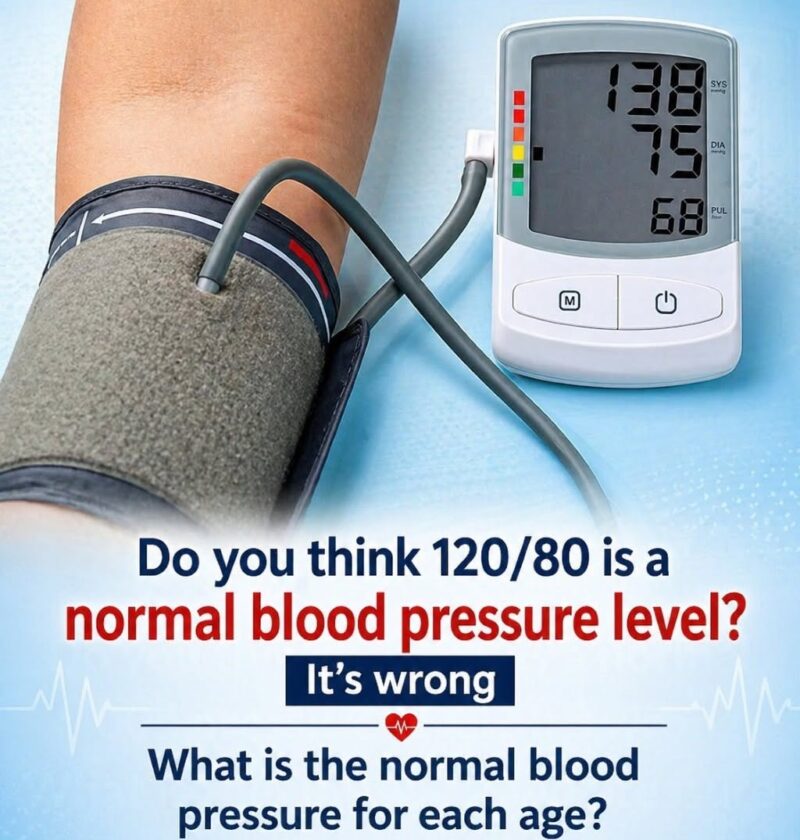
There isn’t a completely different “perfect blood pressure for every single age” in adults anymore—modern medicine mostly uses one standard range for adults, while children use age-based ranges.
Here’s a simple, accurate breakdown:
🧒 Children (approximate normal ranges)
(BP varies by age, height, and sex)
- Newborn (0–1 month): 60–90 / 20–60 mmHg
- Infant (1–12 months): 80–100 / 50–65
- Toddler (1–3 years): 90–105 / 55–70
- Child (4–12 years): 95–110 / 60–75
- Teen (13–17 years): ~110–120 / 65–80
🧑 Adults (18+ years)
Same general target for most ages:
- Normal: <120 / <80 mmHg
- Elevated: 120–129 / <80
- High BP (Stage 1): 130–139 / 80–89
- High BP (Stage 2): ≥140 / ≥90
- Emergency: ≥180 / ≥120 (seek urgent care)
👴 Older adults (60+ years)
- Still ideally: <120/80 mmHg
- Often acceptable target: up to ~130–139 systolic, depending on health condition
- ≥140/90 usually considered high
⚠️ Key takeaway
- Kids: age-based ranges matter
- Adults: one standard applies
- Repeated high readings matter more than one reading
If you want, I can also give you a quick chart of “safe vs dangerous symptoms of BP” or explain what systolic vs diastolic actually means.