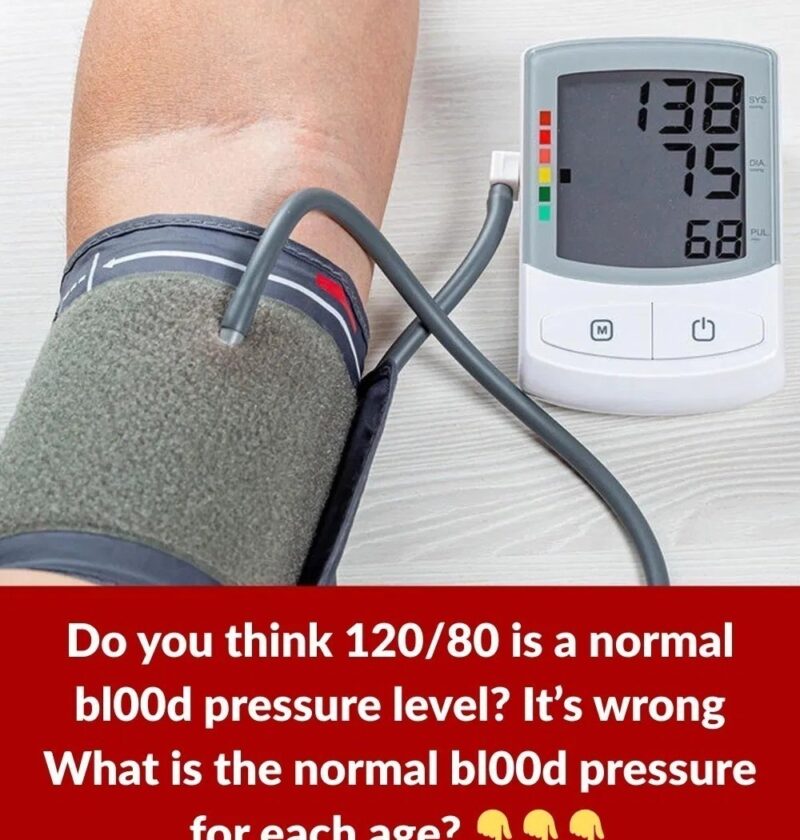
“Normal blood pressure” doesn’t change dramatically by age in healthy adults, but slightly higher readings become more common as people get older due to natural stiffening of blood vessels.
Doctors now generally use a single standard for most adults, with age taken into account mainly for interpretation rather than different “official” cutoffs.
🩺 Standard Normal Blood Pressure (Adults)
For most adults:
- Normal: less than 120/80 mmHg
- Elevated: 120–129 / less than 80
- High (Hypertension Stage 1): 130–139 / 80–89
- High (Stage 2): 140/90 or higher
👶 Blood Pressure by Age (Typical Ranges)
🧒 Children (1–12 years)
Blood pressure varies by height and age, but approximate ranges:
- Preschool (3–5 years): ~95–110 / 55–70
- School-age (6–12 years): ~97–120 / 57–80
Children’s BP is interpreted using percentiles rather than fixed numbers.
🧑 Teenagers (13–17 years)
- Normal: ~110–131 / 64–83
- Teen guidelines are now closer to adult standards.
🧑⚕️ Adults (18–59 years)
- Normal: under 120/80
- Many healthy adults sit around 110–120 / 70–80
👴 Older Adults (60+ years)
- Common “normal range”: up to about 130–139 / 70–80
- Doctors may accept slightly higher systolic pressure in older adults depending on health condition
⚠️ Important: Even in older age, 140/90 is still considered high blood pressure in most guidelines.
📊 Quick Reference Table
| Age Group | Typical Normal BP |
|---|---|
| Children (1–12) | ~95–120 / 55–80 |
| Teens (13–17) | ~110–131 / 64–83 |
| Adults (18–59) | <120 / <80 |
| Seniors (60+) | ~120–135 / 70–85 |
⚠️ When Blood Pressure Is Concerning
- Consistently ≥140/90 → high blood pressure
- ≥180/120 → medical emergency
- <90/60 + symptoms (dizziness, fainting) → low blood pressure concern
🧠 Key Takeaway
There is no perfect “age-by-age fixed number.” Instead:
- 120/80 is the general healthy target
- Risk increases as readings go above that
- Age only slightly shifts what doctors consider “acceptable,” not “ideal”