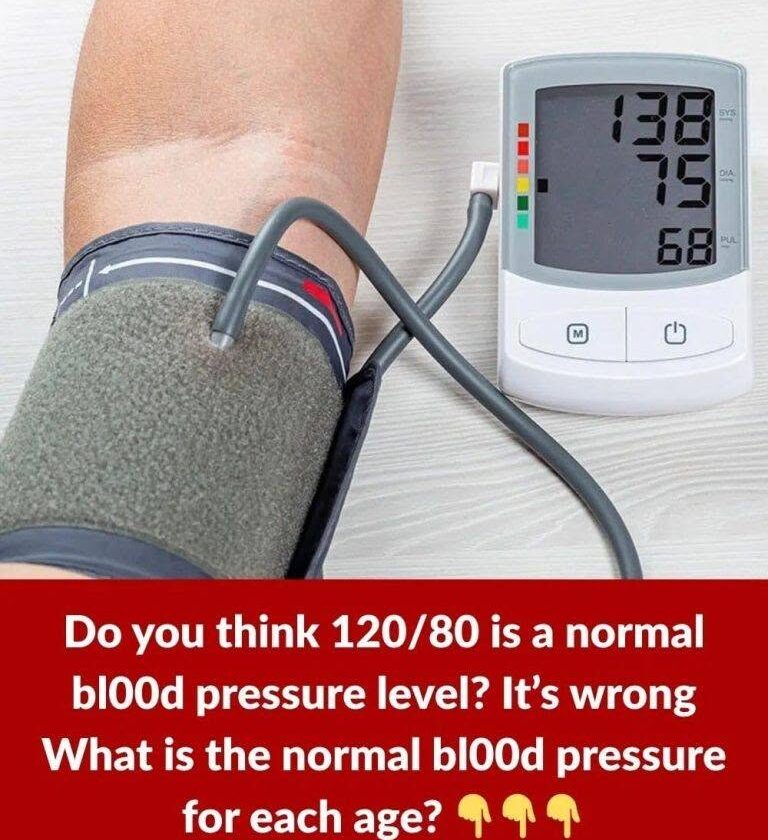
“What is the normal blood pressure for each age?”
Key truth first
There is no separate “perfect blood pressure for every age” in modern medicine. Instead, doctors use a general adult target, with some variation for children and special conditions.
✅ Standard blood pressure (adults)
Most guidelines define:
- Normal:
Less than 120/80 mmHg - Elevated:
120–129 / less than 80 - High blood pressure (Hypertension):
- Stage 1: 130–139 / 80–89
- Stage 2: 140+/90+
👶 Children & teens
For children, “normal” depends on:
- Age
- Height
- Sex
So doctors use percentile charts, not fixed numbers. A simplified idea:
- Younger children → naturally lower BP
- Teens → gradually approach adult range
👴 Older adults
A common myth is that “older people need higher blood pressure.” That’s outdated.
- Many doctors still aim for:
below 130/80 if tolerated - But treatment may be individualized if:
- dizziness or falls occur
- very low BP causes symptoms
🧠 Important reality check
- Blood pressure naturally varies during the day
- Stress, caffeine, pain, and activity affect readings
- One reading alone is not a diagnosis
📊 Simple summary
- Ideal adult BP: around 120/80
- Consistently above 130/80 = high risk zone
- Age changes interpretation slightly, but not dramatically
⚠️ When to worry
Seek medical advice if:
- Repeated readings ≥140/90
- Severe headache, chest pain, or shortness of breath
- Sudden dizziness or fainting
Bottom line
The headline really means:
“Here are general blood pressure ranges, but normal is not strictly different for every age—context matters more than age alone.”
If you want, I can also give you a simple blood pressure chart + what to do naturally to lower it without medication (diet, walking, etc.).