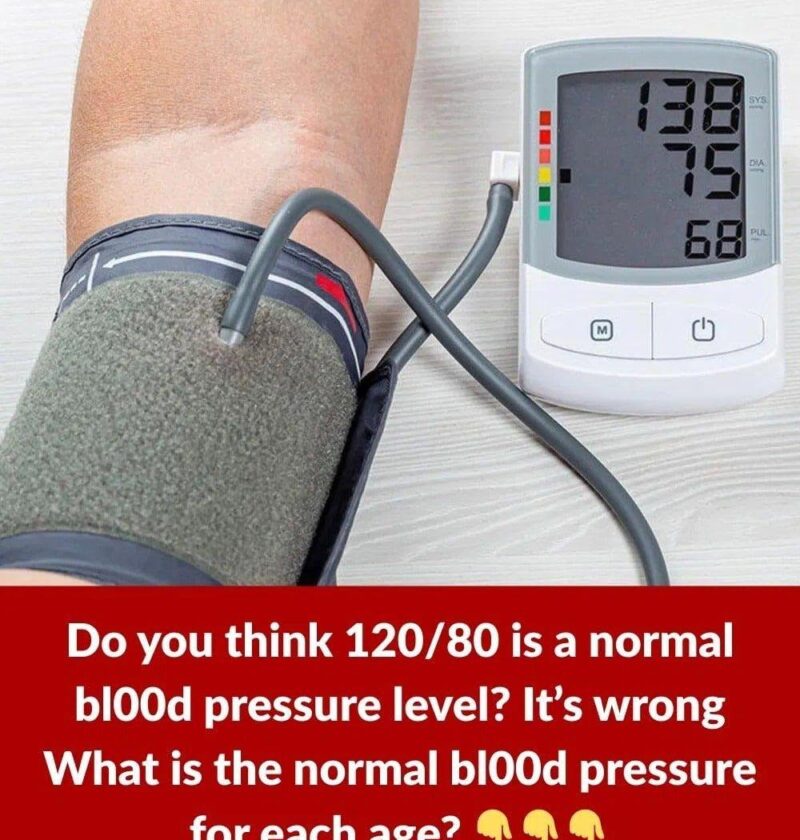
There is no single “normal” blood pressure for each age. For most adults, the same general categories apply regardless of age.
| Category | Systolic (top) | Diastolic (bottom) |
|---|---|---|
| Normal | Less than 120 | and less than 80 |
| Elevated | 120–129 | and less than 80 |
| High Blood Pressure (Stage 1) | 130–139 | or 80–89 |
| High Blood Pressure (Stage 2) | 140 or higher | or 90 or higher |
| Hypertensive crisis | 180 or higher | and/or 120 or higher (seek immediate medical care) |
For children and teenagers, normal blood pressure depends on age, sex, and height, so there isn’t a single number that applies to everyone.
It’s also worth noting that blood pressure tends to rise somewhat with age, but that doesn’t mean higher values are considered healthy. Current medical guidelines generally aim for less than 120/80 mmHg in healthy adults, while treatment goals may be individualized based on age, overall health, and other medical conditions.
If you’re concerned about your blood pressure, it’s best to:
- Measure it after resting quietly for at least 5 minutes.
- Take two or three readings and average them.
- Discuss consistently high or low readings with a healthcare professional rather than relying on age-based charts shared on social media.