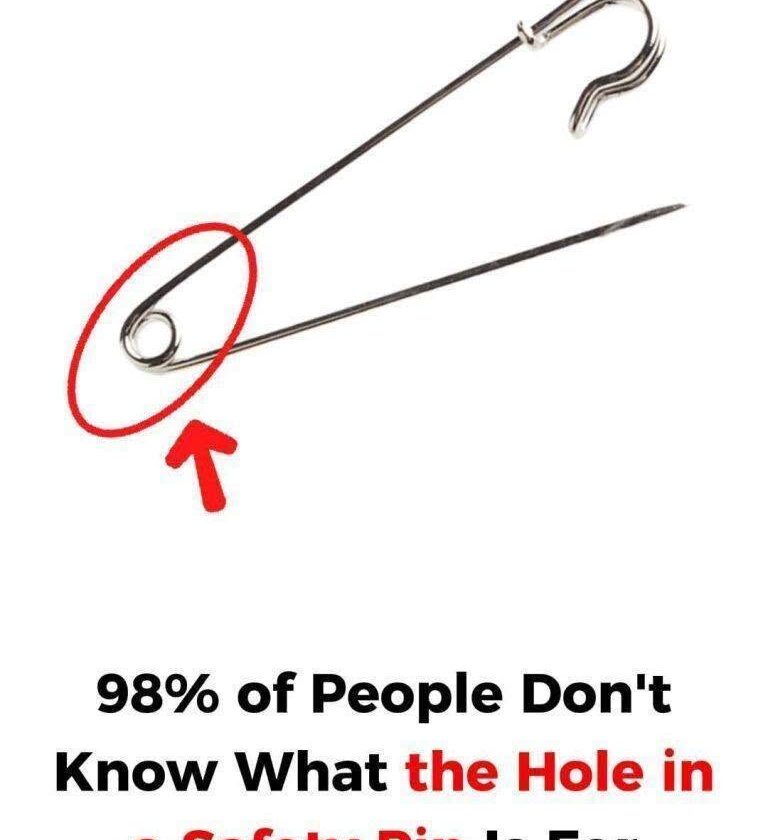
The tiny hole in the head of a safety pin is not just decorative—it serves a practical purpose.
When a safety pin is closed, the sharp point fits into a protective clasp. The small hole or opening in that clasp helps:
- Guide the pin tip into place more easily.
- Secure the point so it is less likely to slip out accidentally.
- Reduce the risk of injury by keeping the sharp end covered when the pin is fastened.
The design is part of what makes a safety pin “safe” compared with a straight pin. The clasp and its small opening help lock the point in position while protecting users from the sharp tip.
The modern safety pin is generally credited to Walter Hunt, who patented the design in 1849. The characteristic clasp mechanism—including the opening that receives the point—is a key feature of the invention.