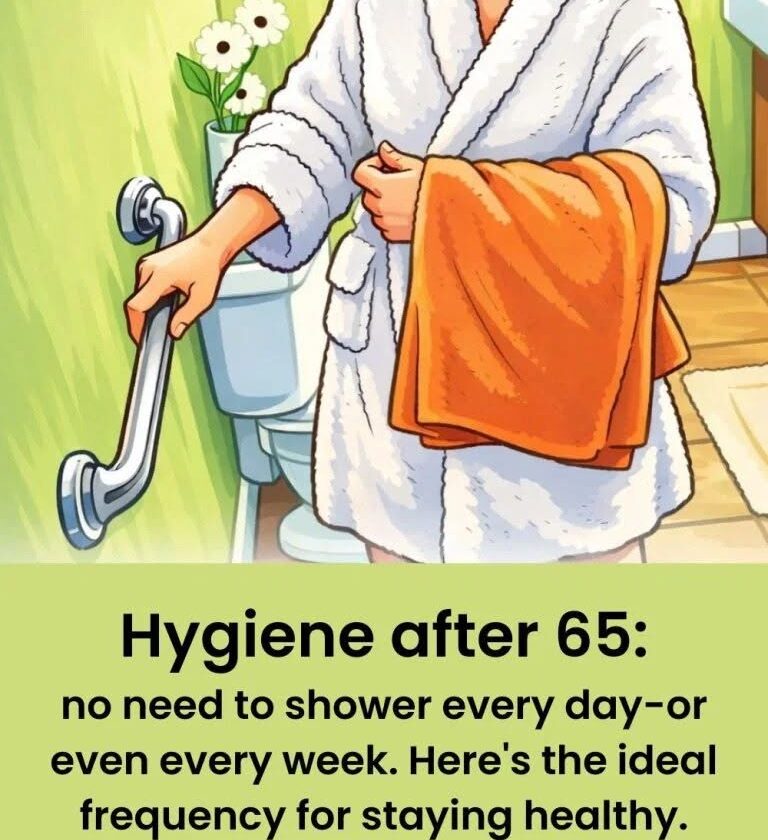
The idea that daily showers after age 65 may do more harm than good comes from changes that often happen to aging skin—not because bathing itself is harmful. For many older adults, the issue is how often and how aggressively they shower.
Why daily showers can sometimes cause problems after 65
- Drier skin: Aging skin produces less natural oil (sebum), which helps keep the skin moisturized and protected. Frequent hot showers and strong soaps can strip away these oils, leading to dryness, itching, and flaking.
- Weaker skin barrier: The outer layer of skin becomes thinner with age, making it easier for moisture to escape and for irritants to cause inflammation.
- More itching and irritation: Long, hot showers and harsh cleansers can worsen conditions like eczema or age-related dry skin.
- Increased risk of small skin injuries: Dry, fragile skin can crack more easily, which may increase the chance of irritation or infection.
- Falls and safety concerns: Bathrooms can become hazardous, especially if a person is weak, has balance problems, or feels dizzy after a hot shower.
Does that mean older adults should stop showering daily?
Not necessarily. Many people over 65 can shower daily if their skin tolerates it and they use gentle habits:
- Use lukewarm water instead of very hot water
- Keep showers short (about 5–10 minutes)
- Use mild, fragrance-free cleansers
- Avoid scrubbing the skin aggressively
- Apply a moisturizer soon after drying off
- Consider washing only key areas (such as underarms, groin, feet, and areas that get sweaty) on some days instead of a full-body wash
For some older adults, showering every other day or a few times per week may be enough, especially in cooler climates or if they have very dry skin.
The best schedule depends on a person’s skin condition, activity level, climate, sweating, medical conditions, and personal preference. A sudden increase in itching, rash, cracking, or skin infections is a reason to discuss bathing habits with a healthcare professional.