Why daily showers after 65 may do more harm than good — what’s true?
The idea that older adults should avoid daily showers is an oversimplification. Showering every day is not automatically harmful, but frequent hot showers and harsh cleansing habits can affect aging skin, which naturally becomes thinner, drier, and more sensitive with age.
How daily showering can cause problems for some older adults
- Dry, irritated skin
- Hot water and frequent washing can remove natural oils that help protect the skin barrier.
- This may lead to itching, flaking, or irritation.
- Worsening of sensitive skin conditions
- People with conditions such as Eczema may find that excessive washing triggers dryness or flare-ups.
- Increased fall risk
- Bathrooms can be hazardous, especially for older adults.
- Wet surfaces, dizziness, poor balance, and standing for long periods can increase the chance of falls.
- Skin barrier disruption
- Overuse of strong soaps, antibacterial washes, or scrubbing can irritate the skin and reduce its protective barrier.
A healthier shower routine for many adults over 65
- Use warm, not very hot, water.
- Keep showers reasonably short.
- Use mild, fragrance-free cleansers.
- Moisturize after bathing while the skin is still slightly damp.
- Focus cleansing on areas that need it most (such as underarms and groin) if full-body washing daily causes dryness.
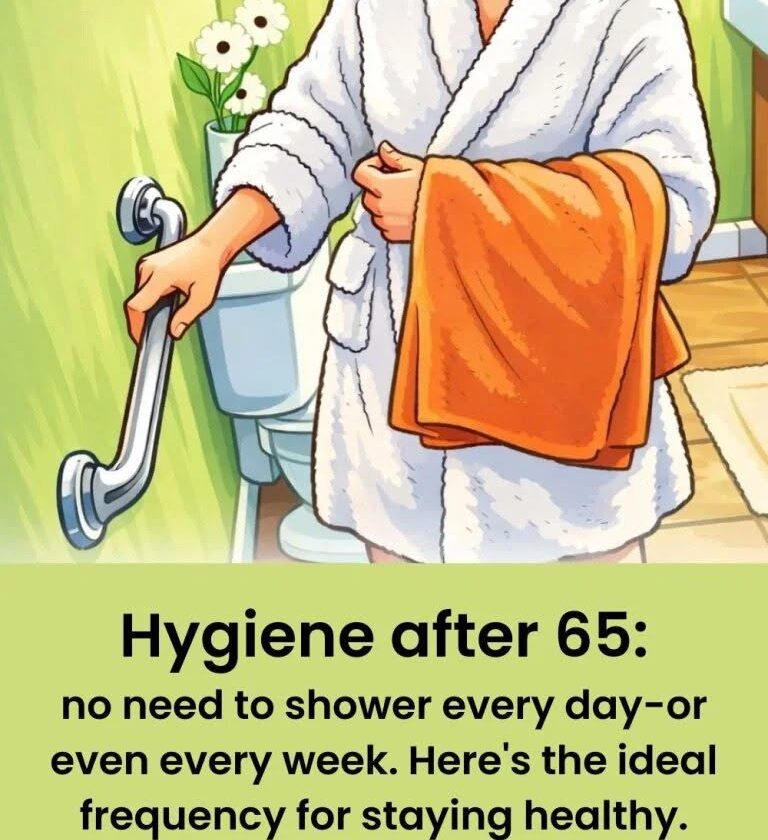
- Consider a shower seat or grab bars if balance is a concern.
How often should older adults shower?
There is no single rule. Some people do well showering daily; others may prefer every other day or a few times per week, depending on:
- activity level,
- sweating,
- skin condition,
- climate,
- personal preference,
- medical needs.
The main goal is maintaining cleanliness, comfort, and healthy skin rather than following a strict schedule. If someone develops persistent itching, cracking skin, rashes, or changes in skin appearance, a healthcare professional can help identify the cause.