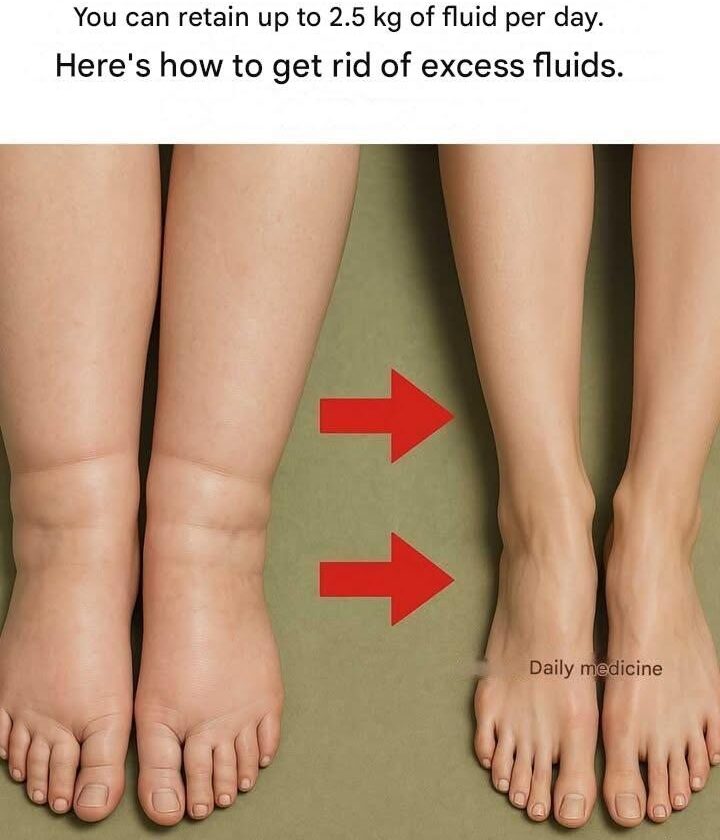
A daily change of a few kilograms on the scale is usually due to fluid shifts, food volume, and digestion—not fat gain. The body can temporarily retain extra water, but there is no guaranteed “flush” method that removes a fixed amount like 2.5 kg for everyone.
Ways to reduce temporary water retention:
- Cut back on excess salt
- High-sodium foods (processed meats, chips, instant meals, and many packaged foods) can make the body hold more water.
- Drink enough water
- Staying hydrated helps your kidneys regulate fluid balance. Restricting water can sometimes make retention worse.
- Eat more potassium-rich foods (if suitable for you)
- Fruits, vegetables, beans, and other potassium sources can help balance sodium.
- If you have kidney disease or are on certain medications, ask a healthcare professional before increasing potassium.
- Move your body
- Walking, stretching, and regular exercise can improve circulation and reduce fluid pooling, especially in the legs.
- Limit highly processed carbohydrates
- Glycogen (stored carbohydrate) holds water, so changes in carbohydrate intake can affect scale weight.
- Sleep well and manage stress
- Hormonal changes from poor sleep and stress can influence fluid balance.
Avoid “detox” drinks or unapproved water-loss pills, which can cause dehydration and electrolyte problems.
If you have swelling in your legs, sudden weight gain, shortness of breath, or a history of heart, kidney, or liver disease, fluid retention may need medical evaluation.