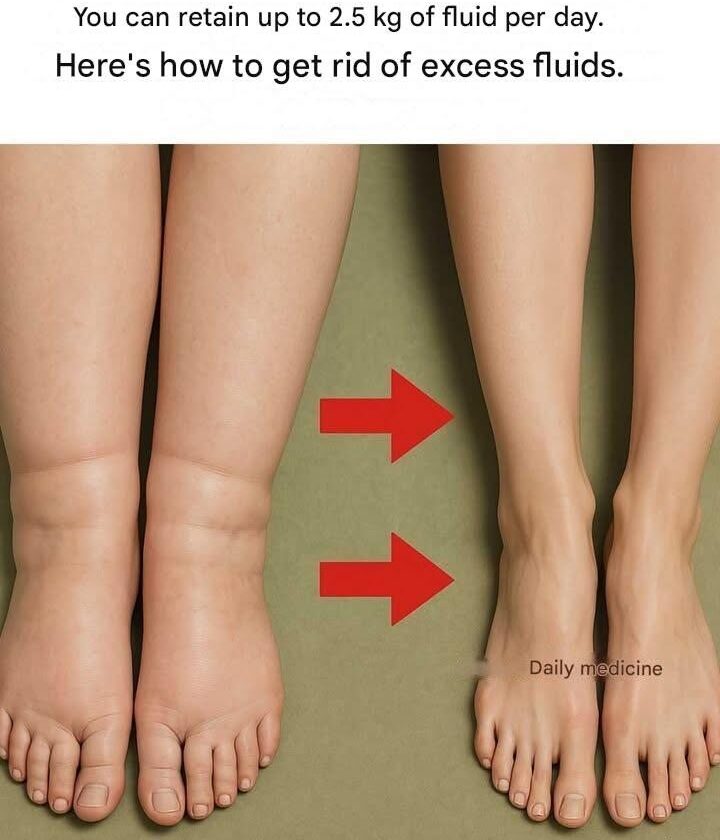
The claim that you can “retain up to 2.5 kg of fluid per day” refers to temporary water weight changes, not usually a buildup of “excess fluid” that needs to be flushed out. Body weight can fluctuate by several kilograms due to changes in hydration, salt intake, hormones, exercise, digestion, and carbohydrate storage.
Common reasons for temporary water retention
- 🧂 High salt intake: Sodium causes the body to hold more water.
- 🍞 Higher carbohydrate intake: Stored glycogen binds with water, which can increase weight temporarily.
- 🪑 Long periods of sitting or standing: Can contribute to swelling, especially in the legs.
- 🏋️ Hard workouts: Muscle repair can temporarily increase fluid storage.
- 🩺 Certain medical conditions: Heart, kidney, liver, or hormone-related issues can cause abnormal fluid retention.
Healthy ways to reduce normal water retention
✅ Drink enough water
Dehydration can make the body hold onto fluid.
✅ Reduce excess salt
Limit highly processed foods and very salty meals.
✅ Eat potassium-rich foods
Foods such as bananas, beans, leafy greens, and potatoes can help balance sodium levels.
✅ Stay active
Walking and regular movement can improve circulation.
✅ Sleep well and manage stress
Hormonal changes can affect fluid balance.
When to seek medical advice
Sudden or significant swelling, especially with:
- Shortness of breath
- Chest pain
- Swelling in only one leg
- Rapid unexplained weight gain
- Swelling of the face or abdomen
may need medical evaluation.
A few days of changing weight is often normal water fluctuation, but persistent or unusual fluid retention should be checked by a healthcare professional.