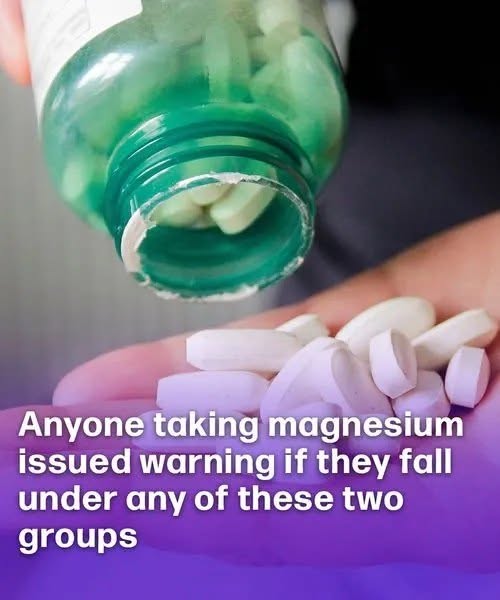
What Is Magnesium?
Magnesium is an essential mineral that supports:
- Muscle and nerve function
- Heart rhythm
- Bone health
- Blood sugar regulation
- Energy production
Many people get enough magnesium through foods such as nuts, seeds, legumes, whole grains, and leafy green vegetables.
Two High-Risk Groups Often Mentioned
1. People With Kidney Disease
Individuals with impaired kidney function may have difficulty removing excess magnesium from the body.
Relevant condition:
- Chronic Kidney Disease
Potential consequences of excessive magnesium accumulation include:
- Low blood pressure
- Nausea
- Muscle weakness
- Irregular heart rhythms
- In severe cases, breathing difficulties or cardiac complications
People with significant kidney disease should generally consult their healthcare provider before taking magnesium supplements.
2. People Taking Certain Medications
Magnesium can interact with several medications, including:
- Some antibiotics
- Certain osteoporosis medications
- Some thyroid medications
- Certain heart medications
Magnesium may reduce the absorption of some drugs if taken at the same time.
Examples include:
- Levothyroxine
- Certain tetracycline and fluoroquinolone antibiotics
A healthcare professional or pharmacist can advise on proper timing.
Signs of Too Much Magnesium
Excess magnesium from supplements (not usually from food) can cause:
- Diarrhea
- Abdominal cramping
- Nausea
More serious symptoms may include:
- Low blood pressure
- Confusion
- Severe weakness
- Slow or irregular heartbeat
The risk is much higher with very large doses or impaired kidney function.
Are Magnesium Supplements Dangerous?
For most healthy adults, magnesium supplements taken within recommended amounts are generally safe.
Common forms include:
- Magnesium Glycinate
- Magnesium Citrate
- Magnesium Oxide
Different forms have different absorption rates and side-effect profiles.
Who Might Benefit From Magnesium?
Some people may benefit from supplementation if they have:
- Documented magnesium deficiency
- Certain gastrointestinal disorders
- Increased magnesium losses
- Specific medical conditions where a clinician recommends supplementation
However, more is not necessarily better.
Key Takeaway
There is no broad new evidence that magnesium supplements are unsafe for most people. The main groups that need extra caution are:
- People with significant kidney disease
- People taking medications that can interact with magnesium
Before starting supplements, especially if you have chronic medical conditions or take prescription medications, it’s wise to discuss them with a healthcare professional. Getting magnesium from a balanced diet is often the safest first approach.