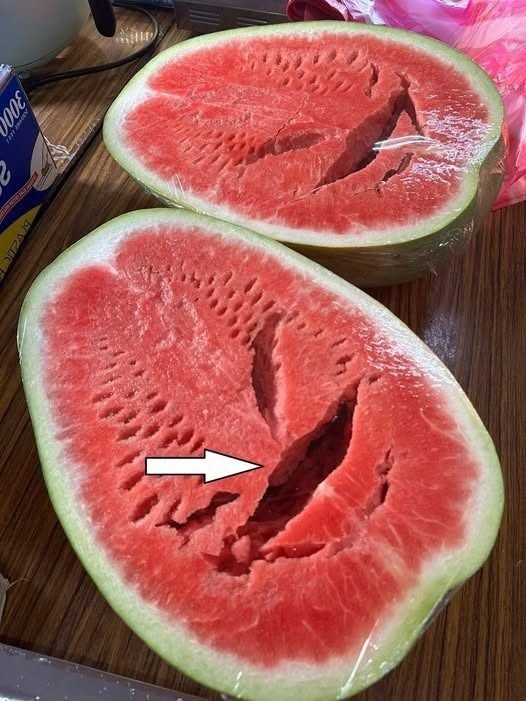
That headline is another classic clickbait exaggeration.A cracked or split watermelon flesh is usually not automatically dangerous, but it can sometimes indicate quality issues depending on the cause.
Why a watermelon might have cracks inside
1. Uneven growth (most common, harmless)
If the fruit grows too fast or unevenly (water + heat changes), the inside can form:
- internal splits
- hollow areas
- “cracking” in the flesh
👉 This is usually not harmful, just a texture issue.
2. Over-ripeness
A very ripe watermelon may:
- become soft inside
- develop gaps or fissures in the flesh
- lose crisp texture
👉 Safe to eat if it smells normal and has no spoilage signs.
3. Stress during growth (temperature or water swings)
Sudden changes in:
- irrigation
- heavy rain after drought
can cause internal stress cracks.
4. Spoilage (this is when you should NOT eat it)
Stop eating if you notice:
- sour or fermented smell
- slimy texture
- mold (white, black, or green spots)
- bubbling or fizzing inside
- bitter or “off” taste
These can indicate microbial growth.
What cracks do NOT mean
- Not automatically “toxic”
- Not a sign of poison
- Not always pesticide-related
Most of the time, it’s just growth stress, not contamination.
Related science
Fruit development issues like this are studied in Plant Physiology, especially how water uptake and temperature affect fruit structure.
Bottom line
- Cracks inside watermelon = usually a quality issue, not a safety emergency
- Only avoid eating it if there are clear spoilage signs (smell, mold, sliminess, fermentation)
If you want, I can show you how to pick a perfect watermelon every time in 30 seconds at the market.