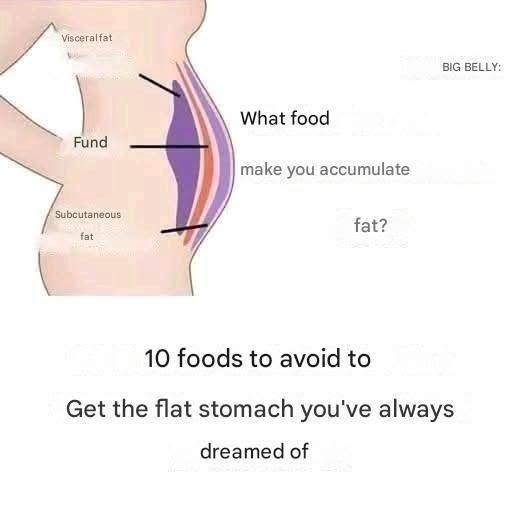
If you’re aiming for a flatter-looking stomach, certain foods may make bloating, water retention, or excess calorie intake more likely. However, no single food “causes belly fat,” and a flat stomach depends on overall diet, activity, sleep, digestion, and individual body composition.
Here are 10 foods and drinks to limit if they tend to make you feel bloated or work against your goals:
- Sugary soft drinks and fizzy beverages
Carbonation can increase gas and bloating, while added sugars can make it harder to maintain a calorie balance. - Ultra-processed snacks
Foods like chips, packaged sweets, and many processed snack foods are often high in refined carbohydrates, salt, and calories. - Refined bread and pastries
White bread, cakes, and pastries can be low in fiber and may lead to quicker hunger for some people. - Deep-fried foods
Fried foods are calorie-dense and can be harder to digest, sometimes causing a heavy, bloated feeling. - High-sodium foods
Processed meats, instant noodles, and salty snacks can increase water retention and temporary puffiness. - Alcohol (especially sugary cocktails and beer)
Alcohol can add extra calories and may contribute to bloating and disrupted sleep. - Large amounts of added sugar
Sweets, desserts, and sugary sauces can make it easier to consume more calories than intended. - Some foods that trigger personal bloating
Beans, onions, garlic, dairy, or certain high-FODMAP foods bother some people but not others. - Processed meats
Items like sausages, hot dogs, and some deli meats are often high in sodium and saturated fat. - Oversized portions of calorie-dense foods
Even nutritious foods like nuts, oils, and cheese can contribute to weight gain if portions regularly exceed your needs.
For a flatter stomach, many people benefit from focusing more on protein-rich foods, vegetables, fiber, adequate water intake, and regular movement rather than trying to eliminate foods completely. If you mean a “flat stomach” specifically because of bloating, fat loss, or a wedding/event deadline, the best approach differs.