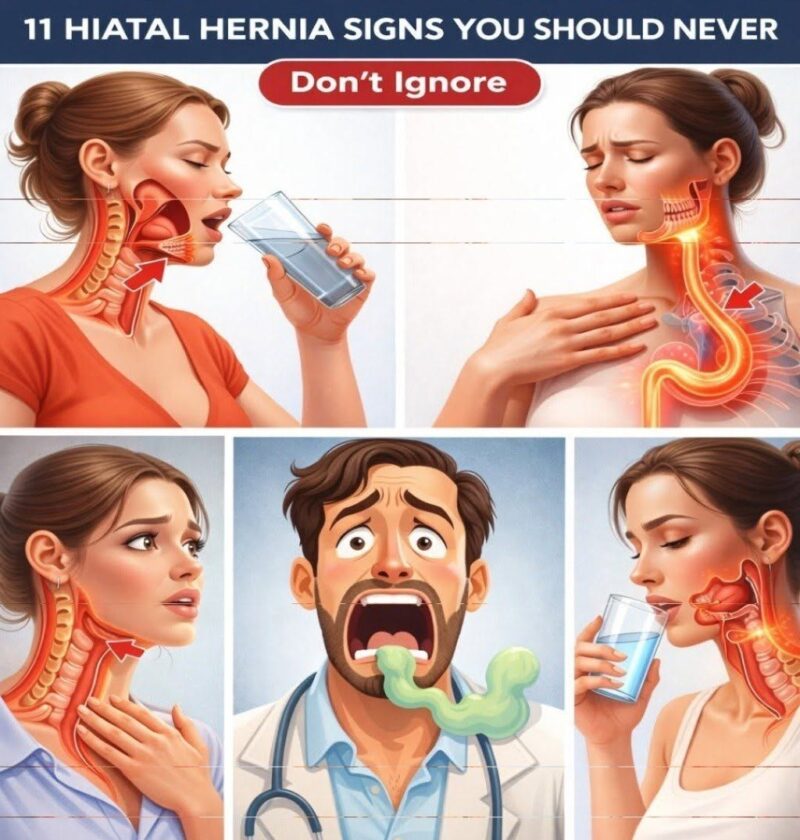
A hiatal hernia occurs when part of the stomach pushes up through the diaphragm into the chest. Many people have a small hiatal hernia and never experience symptoms. When symptoms do occur, they’re often related to acid reflux rather than the hernia itself.
Here are 10 signs and symptoms that can be associated with a hiatal hernia:
- Heartburn – A burning sensation in the chest, especially after eating or when lying down.
- Acid reflux (GERD) – Stomach acid flowing back into the esophagus, causing a sour or bitter taste.
- Difficulty swallowing (dysphagia) – A feeling that food is sticking in the throat or chest.
- Chest pain or discomfort – This can sometimes resemble heart-related pain, so new or severe chest pain should be evaluated promptly.
- Frequent burping or belching – Excess gas or air swallowing may contribute.
- Feeling full quickly – Early satiety during meals.
- Bloating or upper abdominal discomfort – A sensation of pressure or fullness.
- Nausea or occasional vomiting – More likely if the hernia is large or causes complications.
- Chronic cough, hoarseness, or sore throat – Acid reflux can irritate the throat and voice box.
- Shortness of breath – Less common, but a very large hiatal hernia can sometimes contribute by pressing on nearby structures.
When to seek urgent medical care
Seek immediate medical attention if you have:
- Sudden, severe chest pain (especially if it could be a heart attack).
- Severe abdominal pain.
- Persistent vomiting or inability to keep food down.
- Vomiting blood or passing black, tarry stools (which may indicate bleeding).
- Difficulty swallowing that is worsening or prevents you from eating.
How is a hiatal hernia treated?
Treatment depends on the symptoms:
- Lifestyle changes, such as eating smaller meals, avoiding lying down soon after eating, losing weight if appropriate, and elevating the head of the bed, can help reduce reflux.
- Medications that reduce stomach acid (such as proton pump inhibitors or H2 blockers) are commonly used when reflux is present.
- Surgery is usually reserved for people with severe symptoms, complications, or large hernias that don’t respond to other treatments.
Many people with a hiatal hernia live for years with few or no symptoms, and treatment focuses on relieving symptoms rather than the hernia itself. If you have persistent heartburn, trouble swallowing, or recurrent chest discomfort, it’s a good idea to discuss these symptoms with a healthcare professional, who may recommend tests such as an upper endoscopy or imaging if appropriate.