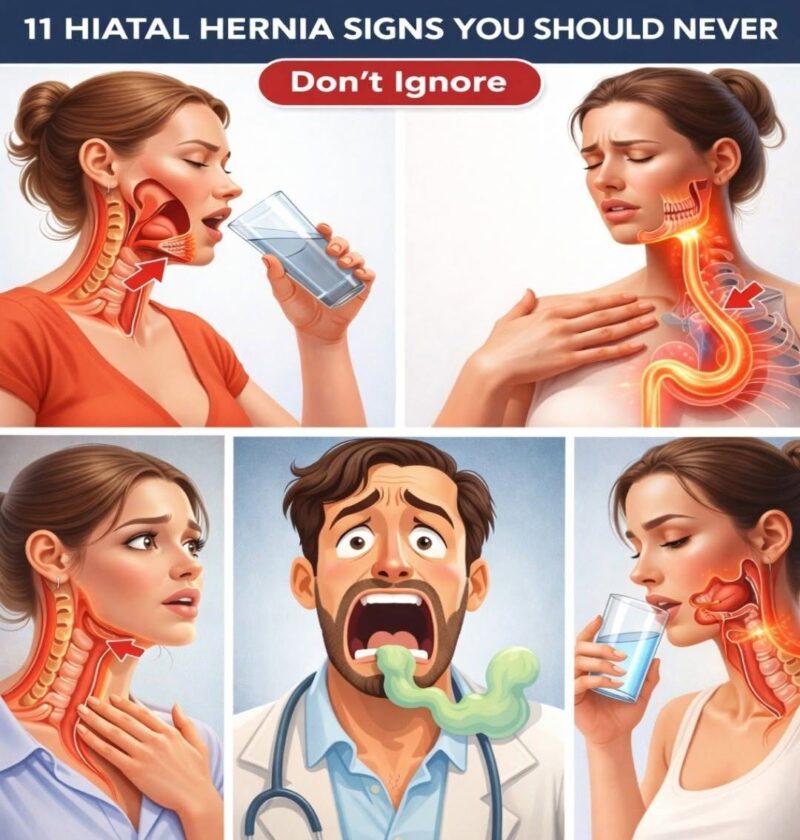
A Hiatal hernia happens when part of the stomach pushes upward through the diaphragm into the chest area. Many people have it without symptoms, but when it does cause problems, it’s usually related to acid reflux and pressure in the upper abdomen.
Here are 10 common signs and symptoms you should know:
1) Heartburn (acid reflux)
Burning feeling in the chest, especially after eating or when lying down.
This is the most common symptom.
2) Regurgitation
Food or sour liquid coming back into the throat or mouth.
Often worse at night or after large meals.
3) Chest pain or pressure
Can feel like tightness in the chest.
Important: it can mimic heart-related pain, so it should never be ignored.
4) Difficulty swallowing (dysphagia)
Feeling like food is “stuck” in the throat or chest.
5) Frequent burping or bloating
Excess gas buildup and discomfort after eating.
6) Shortness of breath
A large hernia can press on the diaphragm, making breathing feel restricted.
7) Sore throat or hoarseness
Acid irritation can affect the throat and vocal cords.
8) Chronic cough
Especially worse at night or after meals, due to acid irritation.
9) Nausea or upset stomach
Feeling of fullness, discomfort, or mild nausea after eating.
10) Feeling full quickly (early satiety)
Even small meals can feel overly filling or uncomfortable.
⚠️ When to seek medical attention
Get checked urgently if you have:
- severe chest pain (to rule out heart issues)
- vomiting blood or black stools
- difficulty swallowing that worsens
- persistent symptoms despite treatment
🧠 Key point
A hiatal hernia often overlaps with acid reflux disease, so many symptoms come from Gastroesophageal reflux disease (GERD) rather than the hernia itself.
✔️ Bottom line
Most hiatal hernias are manageable with:
- diet changes
- weight management
- acid-reducing medications
Surgery is only needed in more severe or complicated cases.
If you want, I can also explain:
- what causes hiatal hernia
- or how to reduce symptoms naturally at home
- or which foods make it worse vs better