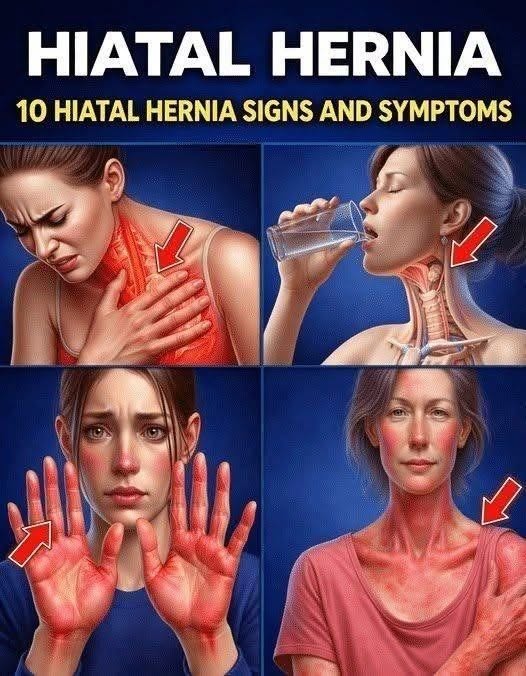
A hiatal hernia happens when part of the stomach pushes up through the diaphragm into the chest area. Many people have it without knowing, but when symptoms occur, they’re often related to acid reflux and stomach pressure.
Here are 10 signs and symptoms you should know:
1. Heartburn (burning chest sensation)
One of the most common symptoms. It often worsens after eating or lying down.
2. Acid reflux
Stomach acid moving back into the throat or mouth, causing a sour or bitter taste.
3. Chest pain or pressure
Can feel like tightness in the chest and may be mistaken for heart problems.
4. Difficulty swallowing
Food may feel like it’s “stuck” in the chest or throat.
5. Frequent belching or bloating
Trapped air and pressure in the stomach can increase burping.
6. Nausea
Some people feel queasy, especially after meals.
7. Regurgitation
Food or liquid coming back up into the throat or mouth.
8. Shortness of breath (in larger hernias)
A large hernia can press on the diaphragm and affect breathing.
9. Feeling full quickly
You may feel full after eating only a small amount of food.
10. Worsening symptoms when lying down
Symptoms often get worse at night or when bending over.
What causes a hiatal hernia?
It can be linked to:
- Aging (muscle weakening)
- Obesity
- Heavy lifting or straining
- Persistent coughing or vomiting
- Genetics in some cases
When to see a doctor
Seek medical advice if you have:
- Severe chest pain
- Trouble swallowing
- Persistent vomiting
- Black or bloody stools
- Symptoms that don’t improve with lifestyle changes
Treatment options
Most people manage symptoms with:
- Eating smaller meals
- Avoiding lying down after eating
- Reducing spicy/fatty foods
- Medications for acid reflux
- In rare cases, surgery
If you want, I can also explain how to tell the difference between hiatal hernia pain and heart attack pain, since they can feel very similar and cause confusion.