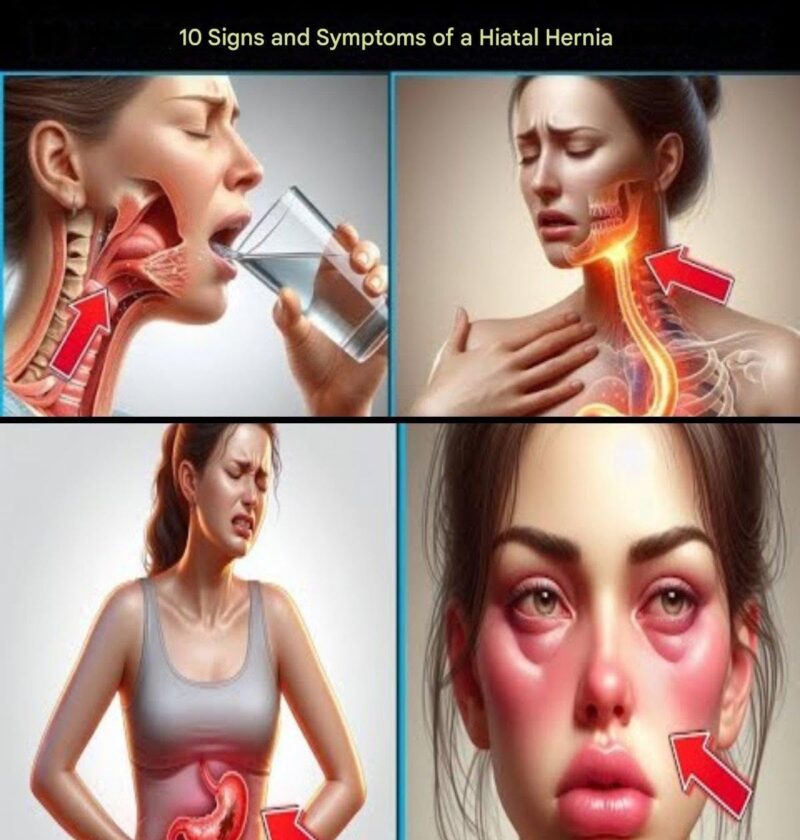
A hiatal hernia happens when part of the stomach pushes upward through the diaphragm into the chest. It’s fairly common, especially with age, and many people don’t even realize they have it.
Here are the key signs and symptoms of a hiatal hernia you should know—explained clearly and realistically.
1. Heartburn (most common symptom)
A burning feeling in the chest, especially:
- After eating
- When lying down
- At night
This happens because stomach acid moves upward more easily.
2. Acid reflux
A sour or bitter taste in the mouth due to stomach acid coming back up.
This is closely related to GERD (acid reflux disease), which often overlaps with a hiatal hernia.
3. Chest discomfort or pressure
Some people feel:
- Tightness in the chest
- Mild pain that can mimic heart problems
⚠️ Important: Chest pain should never be assumed to be only digestive without checking if it could be heart-related.
4. Difficulty swallowing (dysphagia)
Feeling like food is:
- Sticking in the throat or chest
- Moving slowly down the esophagus
5. Frequent burping or belching
Increased air swallowing and stomach pressure can cause:
- Excessive burping
- Bloating after meals
6. Feeling full quickly
Even small meals may cause:
- Early fullness
- Discomfort after eating
7. Regurgitation
Food or liquid may come back into the throat, especially:
- After bending over
- Lying down soon after eating
8. Bloating and abdominal discomfort
Some people experience:
- Upper stomach pressure
- Swelling sensation after meals
9. Nausea
Mild nausea can occur, especially when acid reflux is active.
10. Chronic cough or throat irritation
Stomach acid irritating the throat can lead to:
- Persistent dry cough
- Hoarseness
- “Lump in throat” sensation
Important note
A hiatal hernia often overlaps with acid reflux disease called Hiatal hernia and may not always cause symptoms. Many cases are discovered incidentally during tests for other issues.
When to seek medical attention
Get checked if you have:
- Severe or persistent chest pain
- Trouble swallowing that worsens
- Vomiting blood or black stools
- Unexplained weight loss
- Symptoms not improving with lifestyle changes
Simple ways to reduce symptoms
- Eat smaller meals
- Avoid lying down within 2–3 hours after eating
- Reduce spicy, fatty, and acidic foods
- Elevate the head of your bed
- Maintain a healthy weight
If you want, I can also explain:
- How hiatal hernia is diagnosed (endoscopy vs scan)
- Best diet plan for reflux/hernia symptoms
- Or the difference between GERD and hiatal hernia (they’re often confused)