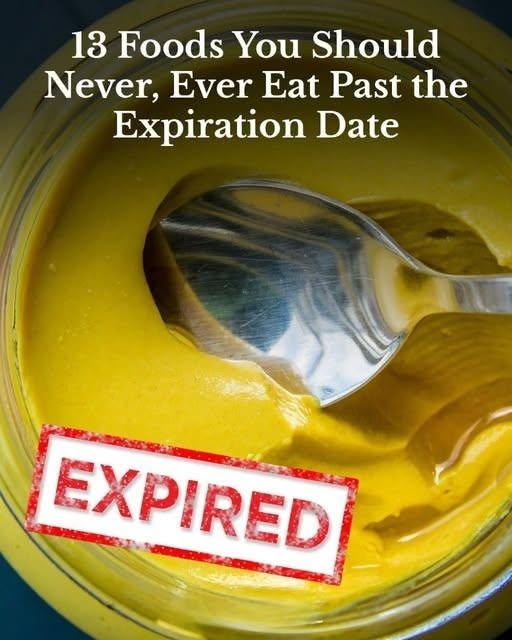
13 Foods You Should Be Careful About Eating After Their Expiration Date
Food dates can be confusing. A “best by” or “best before” date often refers to quality, not safety, while a “use by” date (especially on certain perishable foods) is more important for safety. When in doubt, check for spoilage signs and follow proper storage guidance.
Here are foods that are generally higher risk after their date has passed:
1. Fresh meat and poultry
- Raw chicken, beef, and other meats can allow harmful bacteria to grow if kept too long.
- Avoid eating if they smell bad, feel slimy, or have been stored beyond recommended limits.
2. Fresh fish and seafood
- Seafood spoils quickly and can develop harmful bacteria or toxins.
- It should be used promptly or frozen.
3. Deli meats and sliced cold cuts
- These can support the growth of bacteria such as Listeria, especially after extended storage.
4. Soft cheeses
- Examples: brie, ricotta, cottage cheese, cream cheese, and fresh mozzarella.
- Their high moisture content makes them more prone to spoilage.
5. Eggs
- Properly refrigerated eggs can often remain usable beyond the printed date, but cracked, leaking, or foul-smelling eggs should be discarded.
6. Milk and dairy drinks
- Sour smell, curdling, or unusual texture are signs to throw them away.
- Keep refrigerated and avoid leaving them out for long periods.
7. Cooked leftovers
- Even when refrigerated, leftovers have a limited safe storage period.
- Discard foods that smell unusual or have mold.
8. Ready-to-eat salads
- Pre-made salads (especially those with meat, eggs, or creamy dressings) can spoil quickly.
9. Fresh juices (especially unpasteurized)
- These can support bacterial growth and should be consumed within recommended time frames.
10. Baby formula and baby foods
- Follow expiration dates strictly because nutritional quality and safety are important for infants.
11. Canned foods that are damaged
- Bulging, leaking, heavily rusted, or badly dented cans may indicate contamination.
12. Cooked rice and pasta
- These can allow bacteria such as Bacillus cereus to grow if stored improperly.
13. Moldy foods that cannot be safely trimmed
- Soft fruits, bread, cooked foods, and soft cheeses with mold should generally be discarded because mold can spread below the surface.