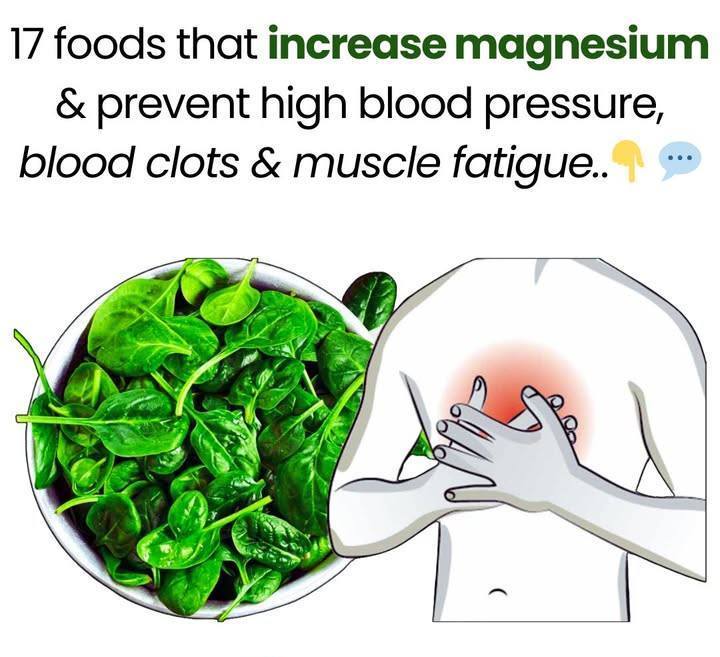
That headline is mixing some truth with a lot of exaggeration.Magnesium is important for muscle function, nerve health, and blood pressure regulation, but no food can guarantee prevention of blood clots or fully control complex conditions like hypertension on its own.
That said, increasing magnesium-rich foods is a genuinely good idea for overall health.
🧠 17 foods high in magnesium
Here are solid, evidence-based sources:
🌱 Nuts & seeds
- Almonds
- Pumpkin seeds
- Sunflower seeds
- Cashews
🥬 Vegetables
- Spinach
- Swiss chard
- Kale
🌾 Whole grains
- Brown rice
- Oats
- Whole wheat
🫘 Legumes
- Black beans
- Chickpeas
- Lentils
🍌 Fruits
- Bananas (moderate magnesium + potassium)
- Avocados (very good source)
🐟 Animal & other sources
- Salmon
- Yogurt
- Dark chocolate (70%+ cacao)
💡 What magnesium actually helps with
Magnesium supports:
- normal muscle contraction and relaxation
- nerve signaling
- heart rhythm stability
- mild blood pressure regulation in some people
Some studies show that adequate magnesium intake may help:
- slightly lower blood pressure in people with deficiency
- reduce muscle cramps in certain cases
⚠️ What it does NOT do
- It does NOT prevent blood clots by itself
- It does NOT replace blood pressure medication
- It does NOT cure cardiovascular disease
Those claims are marketing exaggerations.
🧾 Bottom line
Eating magnesium-rich foods is a healthy habit, but it works as part of an overall lifestyle—not as a standalone “disease prevention trick.”
If you want, I can turn this into a simple daily Pakistani diet plan that naturally boosts magnesium without supplements.