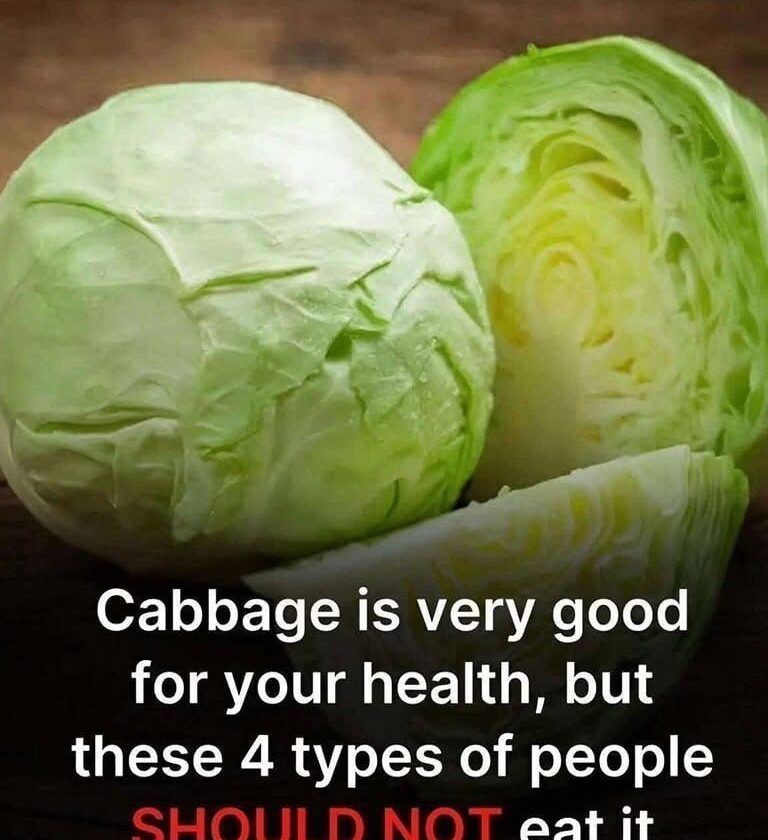
Cabbage is a very healthy vegetable for most people, but in certain cases it may cause problems due to its fiber, sulfur compounds, and vitamin K content.
Here are 4 types of people who should limit or avoid it:
1. People with thyroid problems (especially hypothyroidism)
Cabbage contains goitrogens, natural substances that can interfere with iodine use in the thyroid.
Hypothyroidism
- May worsen thyroid hormone production if eaten in very large amounts raw
- Risk is higher when iodine intake is low
- Cooked cabbage reduces this effect significantly
2. People with IBS or sensitive digestion
Cabbage is high in fiber and fermentable carbohydrates.
Irritable bowel syndrome
- Can cause gas, bloating, and cramps
- Especially in raw form
- Some people tolerate small cooked portions better
3. People taking blood-thinning medication
Cabbage is high in vitamin K, which affects blood clotting.
Warfarin
- Sudden increases in cabbage intake can reduce the effect of warfarin
- Consistency matters more than complete avoidance
- Patients should keep intake stable and monitored
4. People with cabbage allergy or histamine sensitivity (rare)
- Can cause itching, swelling, or digestive upset
- May trigger headaches or flushing in sensitive individuals
- True cabbage allergy is uncommon but possible
Key takeaway
For most people, cabbage is safe, nutritious, and beneficial. Problems usually happen only in:
- Large quantities
- Raw consumption
- Or specific medical conditions
Cooking cabbage often makes it much easier to digest and reduces many of its “problem” effects.
If you want, I can also tell you who should eat more cabbage (it has strong benefits for gut, liver, and weight control).