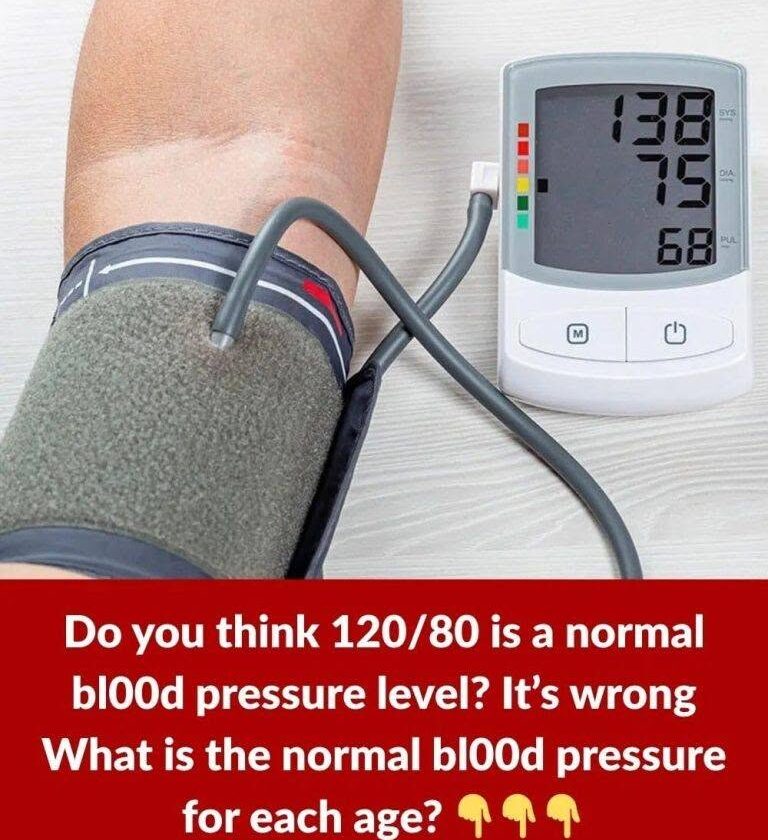
There isn’t a different “normal blood pressure” for every age in modern medical guidelines. Instead, doctors mostly use a single healthy range for adults, with only small variations for children and older adults.
Blood pressure is measured in:
- Systolic (top number): pressure when the heart beats
- Diastolic (bottom number): pressure when the heart rests
Hypertension
Normal Blood Pressure by Age Group
🧒 Children (1–12 years)
Normal BP varies with height and age, but typical ranges:
- Young children: ~90/60 to 110/70 mmHg
- Higher or lower may still be normal depending on growth charts
🧑 Teenagers (13–18 years)
- Normal range: ~110/70 to 120/80 mmHg
- Above 130/80 may be considered high depending on age/size
🧑⚕️ Adults (18–59 years)
- Normal: below 120/80 mmHg
- Elevated: 120–129 / <80
- High (Hypertension): 130/80 or higher
👴 Older adults (60+ years)
- Ideal target: still around <130/80 mmHg (if healthy)
- Slightly higher systolic (up to ~140) may sometimes be accepted depending on overall health
Simple Classification (All Adults)
| Category | Blood Pressure |
|---|---|
| Normal | <120 / <80 |
| Elevated | 120–129 / <80 |
| High (Stage 1) | 130–139 / 80–89 |
| High (Stage 2) | ≥140 / ≥90 |
| Crisis | >180 / >120 |
Low Blood Pressure (Also important)
Hypotension
- Generally: below 90/60 mmHg
- Only a problem if it causes dizziness, fainting, or weakness
Key Takeaways
- There is no strict “perfect number” for each age
- Most adults should aim for around 120/80 mmHg
- Consistent high readings matter more than a single reading
If you want, I can also show:
- How to naturally lower blood pressure without medicine
- Or how to measure BP correctly at home (most people do it wrong)