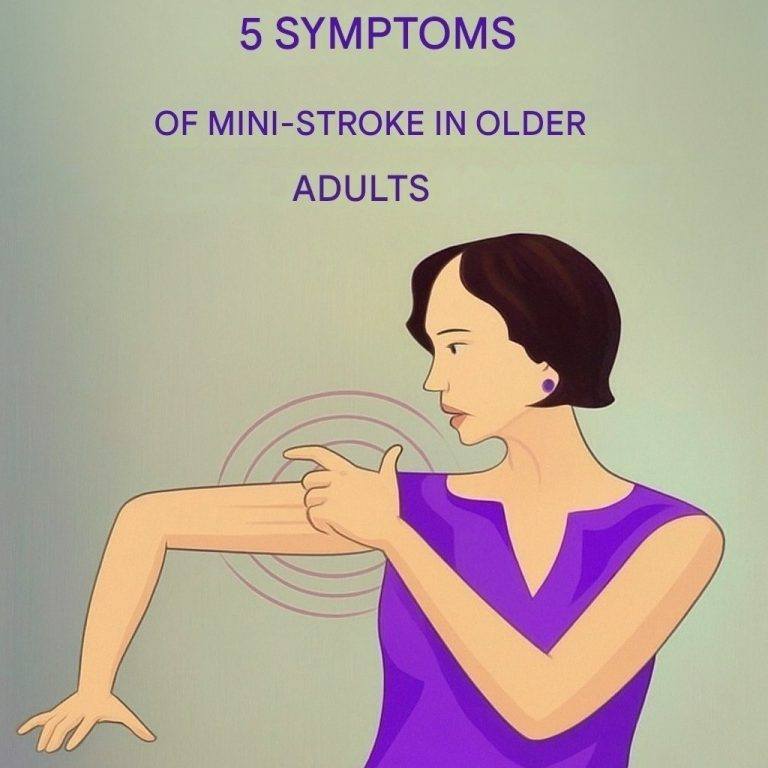
A “mini stroke” is usually a transient ischemic attack (TIA) — a temporary blockage of blood flow to the brain. Symptoms may last only minutes or hours, but a TIA is a medical emergency because it can be a warning sign of a major stroke.
Here are 5 important symptoms in seniors that should never be ignored:
- Sudden weakness or numbness on one side of the body
This may affect the face, arm, or leg. A drooping face or inability to raise one arm evenly are common warning signs. - Trouble speaking or understanding speech
Seniors may suddenly slur words, speak incoherently, or have difficulty understanding simple conversation. - Sudden vision problems
Blurred vision, double vision, or temporary loss of sight in one or both eyes can occur during a mini stroke. - Loss of balance or dizziness
Difficulty walking, unexplained falls, poor coordination, or sudden dizziness may signal reduced blood flow to the brain. - Sudden severe confusion or memory changes
A senior may appear disoriented, confused about familiar people or places, or have abrupt cognitive changes that are unusual for them.
A common emergency checklist is FAST:
- Face drooping
- Arm weakness
- Speech difficulty
- Time to call emergency services immediately
Even if symptoms disappear quickly, immediate medical evaluation is important because the risk of a full stroke is highest within the next 48 hours after a TIA.
Risk factors in seniors include:
- High blood pressure
- Diabetes
- Smoking
- High cholesterol
- Heart disease or atrial fibrillation
If you’d like, I can also explain:
- the difference between a mini stroke and a major stroke,
- warning signs specific to elderly women,
- or what doctors typically do after a suspected TIA.