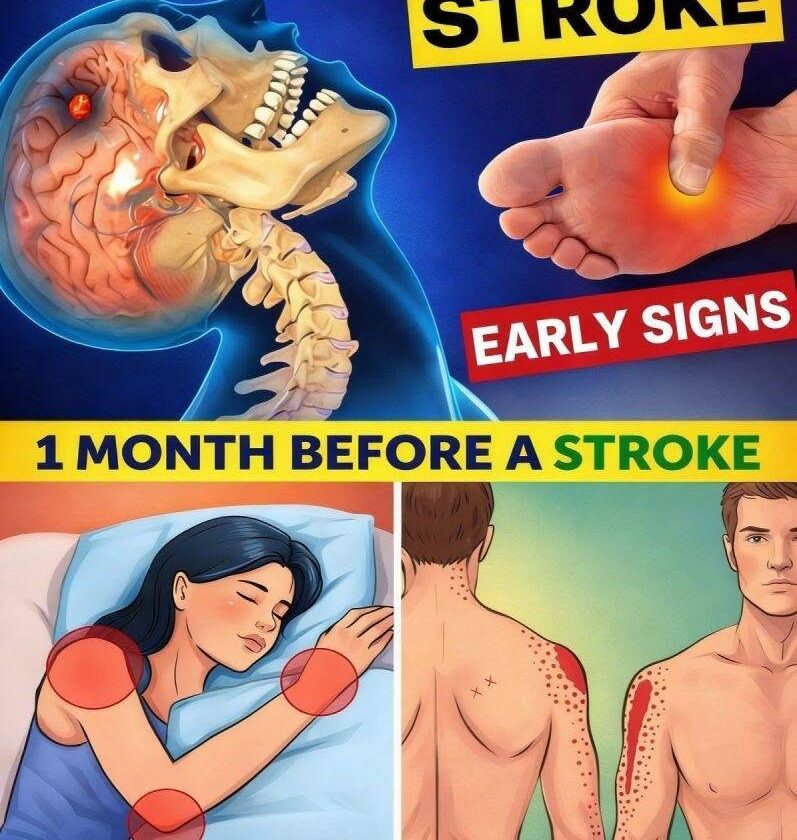
The idea that there are “8 warning signs of a stroke that appear one month before” is a common online claim, but it is not medically accurate. Most strokes happen suddenly, and there is no reliable checklist of symptoms that predicts a stroke exactly one month in advance.
However, some people may experience warning events, especially a transient ischemic attack (TIA) (sometimes called a mini-stroke). A TIA can be a warning sign of a possible future stroke and requires urgent medical attention.
Possible warning signs that should never be ignored
- Sudden weakness or numbness in the face, arm, or leg (especially on one side).
- Sudden trouble speaking or understanding words.
- Sudden vision problems (blurred vision or loss of vision).
- Sudden dizziness, loss of balance, or difficulty walking.
- Sudden severe headache with no known cause.
- Sudden confusion or difficulty concentrating.
- Facial drooping on one side.
- Brief episodes of stroke-like symptoms that disappear (possible TIA).
9 ways to help reduce stroke risk
- Control blood pressure — high blood pressure is one of the biggest stroke risk factors.
- Keep blood sugar under control if you have diabetes.
- Avoid smoking and tobacco products.
- Exercise regularly (as recommended for your health condition).
- Eat a heart-healthy diet with more vegetables, fruits, whole grains, and lean proteins.
- Manage cholesterol levels.
- Maintain a healthy weight.
- Limit alcohol intake.
- Take prescribed medications as directed and attend regular health checkups.
Remember FAST
- F — Face: Is one side drooping?
- A — Arms: Is one arm weak or numb?
- S — Speech: Is speech strange or unclear?
- T — Time: Seek emergency help immediately.
If stroke symptoms appear, do not wait for them to go away—fast treatment can greatly affect recovery.