Your feet can sometimes provide early clues to underlying health conditions, but no single symptom is enough to diagnose a specific disease. Here are 9 foot symptoms you shouldn’t ignore and some of the possible causes.
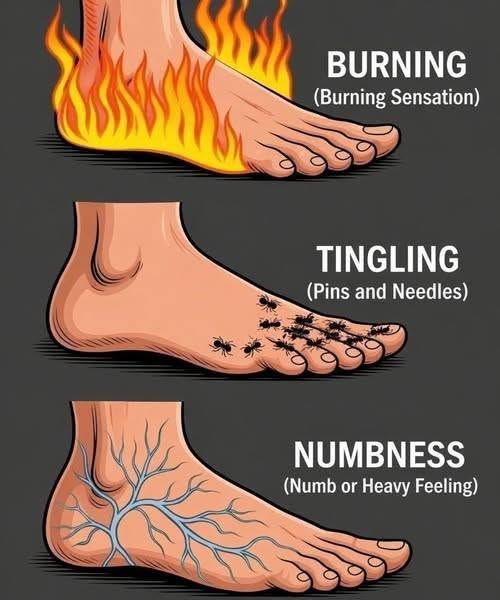
- Persistent numbness or tingling
- May be associated with nerve damage, including Diabetic Neuropathy, vitamin deficiencies, or nerve compression.
- Burning pain in the feet
- Can occur with Peripheral Neuropathy, including neuropathy related to Diabetes, but may also have other causes.
- Cold feet
- May result from poor circulation, Peripheral Artery Disease, or conditions such as **Hypothyroidism>.
- Swollen feet or ankles
- Can be caused by prolonged standing, but persistent or unexplained swelling may be related to Heart Failure, Chronic Kidney Disease, vein problems, or certain medications.
- Sores or cuts that don’t heal
- May indicate Diabetes, poor circulation, or infection and should be evaluated promptly.
- Changes in skin color
- Pale, bluish, or dark discoloration can suggest reduced blood flow or other circulatory problems.
- Thick, brittle, or discolored toenails
- Often caused by a fungal infection but can also occur with poor circulation or repeated trauma.
- Pain in the calf or foot when walking that improves with rest
- This pattern, called claudication, is a common symptom of Peripheral Artery Disease.
- Loss of hair on the feet or lower legs
- May be another sign of reduced blood flow from Peripheral Artery Disease, though aging and other factors can also contribute.
When to seek medical care
Seek prompt medical attention if you have:
- A foot wound that’s worsening or not healing.
- Sudden severe pain, swelling, or color changes.
- Fever with redness or warmth of the foot.
- Numbness or weakness that develops suddenly.
- Chest pain, shortness of breath, or other symptoms suggesting a medical emergency.
The bottom line
Foot symptoms can be early signs of problems affecting the nerves, blood vessels, joints, or skin, but they do not point to a single diagnosis on their own. If a symptom is persistent, worsening, or accompanied by other concerning signs, it’s worth discussing with a healthcare professional, especially if you have Diabetes, high blood pressure, or a history of circulation problems.