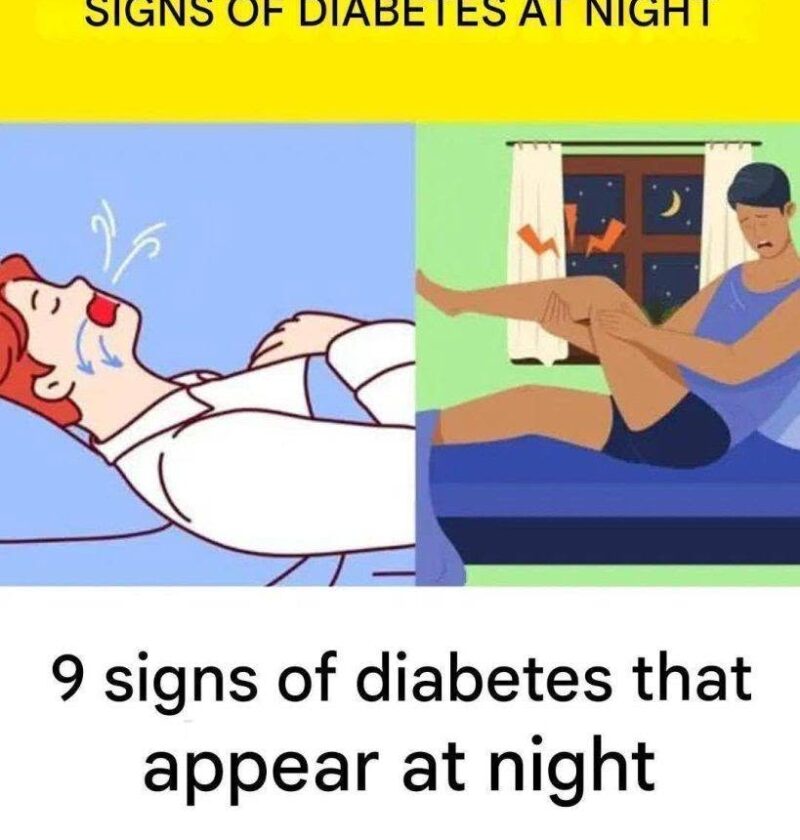
If you mean warning signs of diabetes that may show up or become more noticeable at night, common ones include:
- Frequent urination during the night (nocturia)
High blood sugar can make the kidneys remove extra glucose through urine, causing more trips to the bathroom. - Excessive thirst at night
Losing more fluids through urination can lead to intense thirst, especially when trying to sleep. - Night sweats
Some people with diabetes—especially those taking insulin or certain diabetes medicines—may experience sweating episodes from low blood sugar (hypoglycemia). - Feeling unusually hungry before bed or waking up hungry
Blood sugar fluctuations can trigger hunger even after eating. - Poor or disturbed sleep
Blood sugar changes, thirst, urination, or discomfort from nerve symptoms can interrupt sleep. - Tingling, burning, or numbness in the feet at night
Diabetic nerve damage (diabetic neuropathy) often becomes more noticeable when resting. - Blurred vision in the evening or at night
Changes in blood glucose levels can affect the eye’s lens and temporarily alter vision. - Slow-healing cuts, itching, or dry skin
Diabetes can affect circulation and skin health, and symptoms may be noticed during nighttime routines. - Leg cramps or restless legs
Nerve changes, circulation problems, or blood sugar-related issues may contribute to nighttime leg discomfort.
These symptoms do not prove someone has diabetes, because many other conditions can cause them. If you notice several of these signs—especially increased thirst, frequent urination, unexplained weight loss, fatigue, or recurrent infections—a blood glucose test (such as fasting glucose or HbA1c) can help clarify the cause.