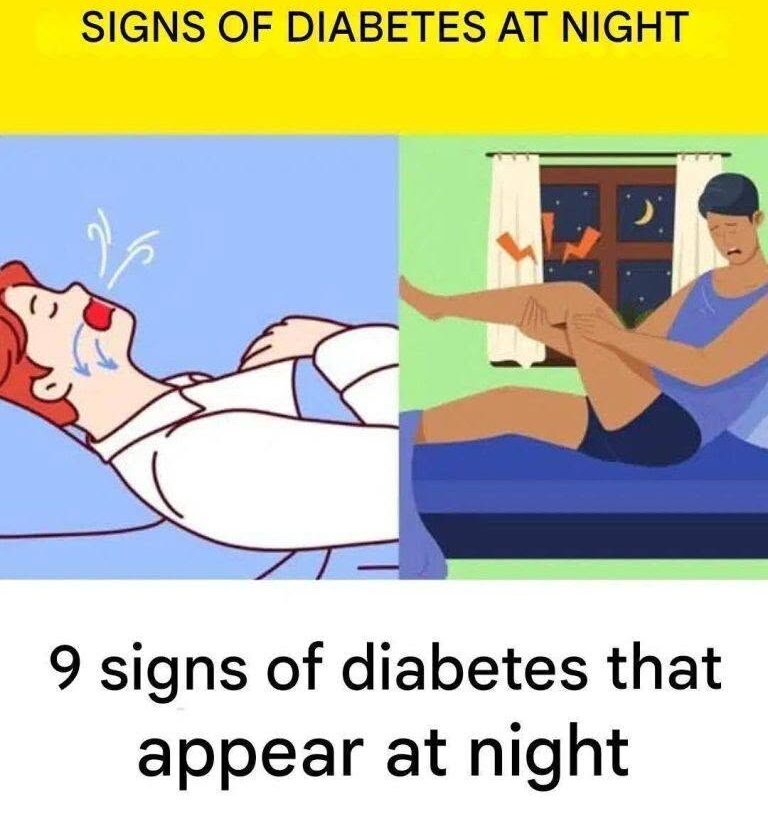
Diabetes and Why Symptoms Can Worsen at Night
Diabetes is a chronic condition that affects how the body regulates blood sugar (glucose). In type 1 and type 2 diabetes, either insulin is not produced properly or the body cannot use it effectively.
While symptoms can appear at any time of day, some become more noticeable at night due to:
- fasting during sleep
- hormonal changes
- reduced physical activity
- blood sugar fluctuations
Nighttime can reveal hidden issues with blood sugar control.
Why Night Symptoms Are Often Missed
During the day, people are active, eating, and distracted. At night:
- the body is at rest
- blood sugar changes are more noticeable
- sleep disturbances become obvious
- dehydration symptoms may worsen
This is why some early warning signs show up during sleep.
Common Nighttime Symptoms Linked to Diabetes
1. Frequent Night Urination (Nocturia)
One of the most common signs.
High blood sugar forces the kidneys to work harder, leading to:
- frequent trips to the bathroom at night
- disrupted sleep
- dehydration over time
2. Excessive Thirst at Night
When blood sugar is high:
- the body loses more fluid
- dehydration increases
- thirst becomes stronger, especially at night
People may wake up needing water repeatedly.
3. Night Sweats
Some people with blood sugar fluctuations may experience:
- sweating during sleep
- waking up drenched or uncomfortable
This can sometimes be linked to glucose instability.
4. Restless Sleep or Insomnia
Blood sugar changes can affect sleep quality:
- difficulty falling asleep
- frequent waking
- light, disturbed sleep
5. Nighttime Leg Cramps
Poor circulation or nerve changes may contribute to:
- painful muscle cramps at night
- tightness in legs or feet
- discomfort during sleep
6. Tingling or Burning Sensation in Feet
Diabetic nerve irritation (neuropathy) may cause:
- tingling
- burning
- numbness in feet or legs
- symptoms that worsen at night
7. Sudden Hunger at Night
Blood sugar instability may trigger:
- nighttime hunger
- cravings for carbohydrates or sweets
8. Fatigue Despite Sleeping
People with uncontrolled diabetes may wake up feeling:
- tired
- unrefreshed
- low in energy
This is often due to poor sleep quality or glucose imbalance.
9. Blurred Vision at Night
Fluctuating blood sugar levels can temporarily affect the eye’s lens, causing:
- blurry vision
- difficulty focusing in low light
- eye strain