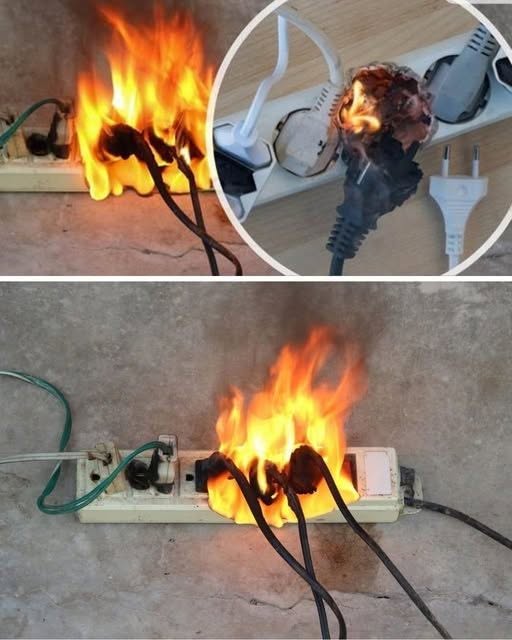
9 things you should never (or usually shouldn’t) plug into a power strip
Power strips are designed for low-to-moderate power electronics, such as chargers, computers, lamps, and small devices. They are not a replacement for a wall outlet, especially for high-wattage appliances that can overload the strip, overheat wiring, and increase fire risk.
1. Space heaters
Portable heaters draw a lot of electricity and are one of the most common causes of power-strip overheating. Plug them directly into a wall outlet whenever possible.
2. Air conditioners
Window and portable air conditioners often require more current than a typical power strip can safely handle.
3. Refrigerators and freezers
These appliances have compressors that create startup surges and are usually better connected directly to a properly grounded wall outlet.
4. Microwaves
Microwave ovens use high amounts of power and should generally have their own dedicated outlet.
5. Toasters and toaster ovens
Heating appliances can draw significant current and may overload a power strip.
6. Coffee makers and electric kettles
Anything that heats water can use substantial power. These are safer when plugged directly into a wall outlet.
7. Hair dryers and styling tools
Hair dryers, curling irons, and straighteners can pull high wattage and may exceed the safe capacity of many strips.
8. Washing machines and dryers
Large appliances with motors and heating elements should typically be plugged into dedicated outlets designed for their electrical load.
9. Another power strip (“daisy chaining”)
Plugging one power strip into another can overload the circuit and is a common unsafe practice.
Safer power-strip habits
- Check the strip’s maximum wattage/amp rating.
- Replace strips that are cracked, discolored, warm to the touch, or have damaged cords.
- Use a properly rated surge protector for computers and sensitive electronics.
- Avoid covering power strips with rugs, furniture, or fabric where heat can build up.
- Plug high-power appliances directly into a wall outlet.
A power strip is best thought of as an extension of available outlets, not as a way to increase the amount of power a household circuit can provide.