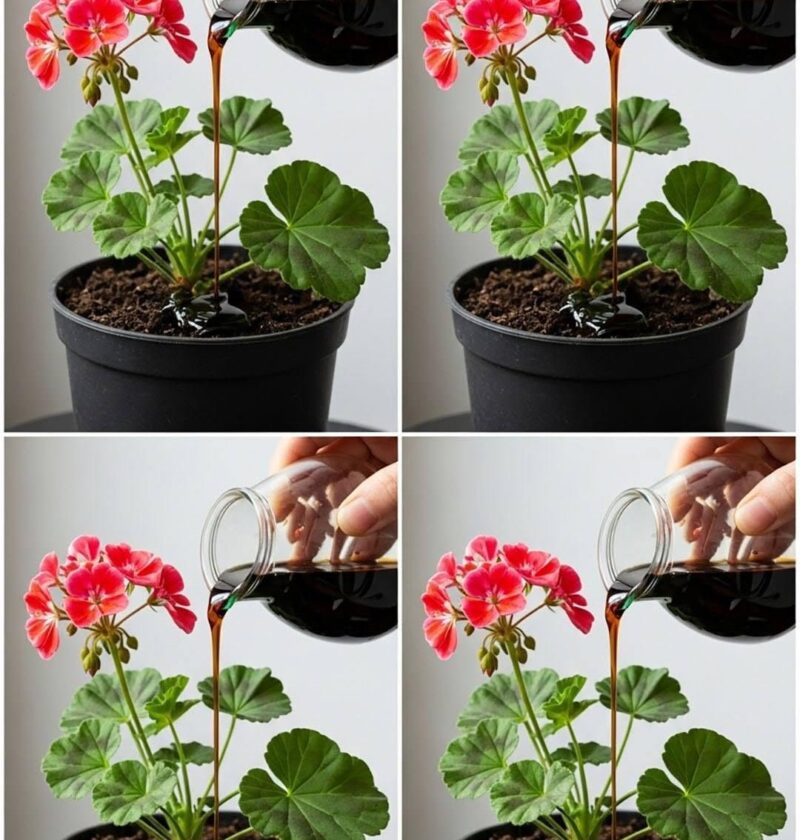
That claim is another “viral gardening shortcut” that oversimplifies how plants actually work.
Geraniums can bloom for a long time, but not continuously for a year without breaks, because flowering depends on light, temperature, nutrients, and pruning cycles.
Geranium (commonly called pelargoniums in many garden varieties) are naturally long-blooming plants, but they still need the right conditions to keep producing flowers.
What actually helps geraniums bloom longer (real factors)
1) Plenty of sunlight (most important)
Geraniums need:
- At least 5–6 hours of direct sunlight daily
Without enough light, they produce leaves but fewer flowers.
2) Regular deadheading
Removing spent flowers:
- Prevents the plant from going into “seed mode”
- Encourages new buds to form
This is one of the biggest real “bloom boosters.”
3) Proper watering (not too much)
- Water when the top soil is dry
- Avoid constantly wet soil (causes root problems and fewer flowers)
Geraniums prefer slightly dry conditions over soggy soil.
4) Balanced fertilizer
Too much nitrogen = lots of leaves, fewer flowers.
A fertilizer higher in phosphorus supports blooming.
5) Pruning and reshaping
Cutting back leggy stems:
- Encourages bushier growth
- Leads to more flowering points
Why “continuous blooming for a year” is misleading
Even healthy geraniums:
- Naturally slow down in extreme heat or cold
- Take short rest cycles
- Respond to seasonal daylight changes
So they may bloom heavily for long periods, but not nonstop year-round in most climates.
Bottom line
There is no single trick that makes geraniums bloom nonstop for a year. What actually works is:
sunlight + deadheading + correct watering + proper feeding + pruning
If you want, I can give you a simple “weekly geranium care routine” that maximizes flowering with very little effort.