Fast Weed Control Solutions – What Really Works and What to Expect
Why Weeds Keep Coming Back
Weeds are persistent because many species spread through:
- Deep root systems
- Underground runners (rhizomes)
- Wind-blown seeds
- Dormant seeds already present in the soil
Even when the leaves appear dead, the root system may remain alive and capable of producing new growth.
Can Household Ingredients Kill Weeds?
Several common household ingredients are often used for spot treatment of weeds.
White Vinegar
Household vinegar can damage the leaves of young weeds by removing moisture from plant tissues.
It tends to work best on:
- Small annual weeds
- Newly emerged weeds
- Weeds growing in cracks and pathways
However, vinegar usually does not kill deep roots of established perennial weeds.
Boiling Water
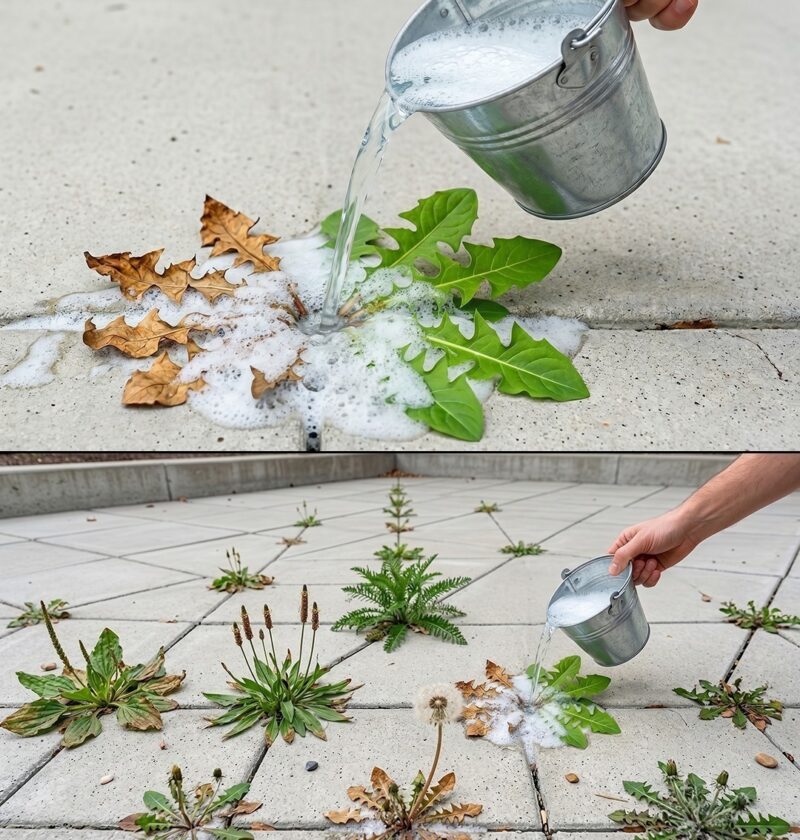
Pouring boiling water directly onto weeds can quickly damage plant tissues.
This method may be useful for:
- Weeds between paving stones
- Driveway cracks
- Sidewalk edges
Care should be taken to avoid nearby desirable plants.
Salt-Based Solutions
Salt can damage weeds but may also:
- Harm surrounding soil
- Affect nearby plants
- Remain in the ground for extended periods
Because of these drawbacks, salt should be used cautiously and only in locations where future plant growth is not desired.
The Most Effective Long-Term Weed Control Methods
1. Remove the Entire Root
For many weeds, physically removing the root is one of the most reliable solutions.
Helpful tools include:
- Hand weeders
- Garden forks
- Dandelion pullers
2. Apply Mulch
Mulching can help suppress weed growth by blocking sunlight.
Common mulch materials include:
- Wood chips
- Straw
- Bark mulch
- Compost
A layer of 2–4 inches is often recommended.
3. Use Landscape Fabric
Landscape fabric beneath mulch can further reduce weed emergence while allowing water to reach the soil.
4. Maintain Healthy Lawn and Garden Beds
Dense grass and healthy plantings naturally compete with weeds for:
- Sunlight
- Water
- Nutrients
This reduces opportunities for weeds to establish.
Why “Never Grow Again” Is Usually Unrealistic
Most weed-control methods require ongoing maintenance because:
- New seeds can arrive from neighboring areas
- Existing seeds can remain dormant for years
- Some weeds regenerate from small root fragments
Successful weed management is usually a combination of:
- Early removal
- Mulching
- Soil coverage
- Regular monitoring
Safety Considerations
When using any weed-control product or method:
- Wear gloves when appropriate
- Keep children and pets away until treatment areas are safe
- Follow product directions carefully
- Avoid overspraying desirable plants
Final Thoughts
There is no universal weed killer that guarantees weeds will “never grow again.” Some methods can quickly damage visible weeds, but long-term control typically requires removing roots, preventing seed spread, and maintaining healthy garden conditions.
Consistent weed management is usually more effective than relying on a single treatment.
Sources
- University of California Agriculture and Natural Resources
- Royal Horticultural Society
- University of Minnesota Extension
- National Gardening Association
Part 2: Simple Vinegar Weed Spray (For Young Surface Weeds)
Ingredients
- 1 gallon white vinegar
- Spray bottle or garden sprayer
Method
- Fill the sprayer with white vinegar.
- Choose a dry, sunny day.
- Spray directly onto weed leaves.
- Avoid contact with desirable plants.
- Reapply if new growth appears.
Best Use
- Sidewalk cracks
- Driveways
- Gravel paths
- Patio edges
Reminder
This method may damage above-ground growth quickly, but established weeds may regrow if roots remain alive. For long-term results, combine treatment with root removal and preventive garden maintenance.