Common causes
1. Repeated exposure to water and chemicals
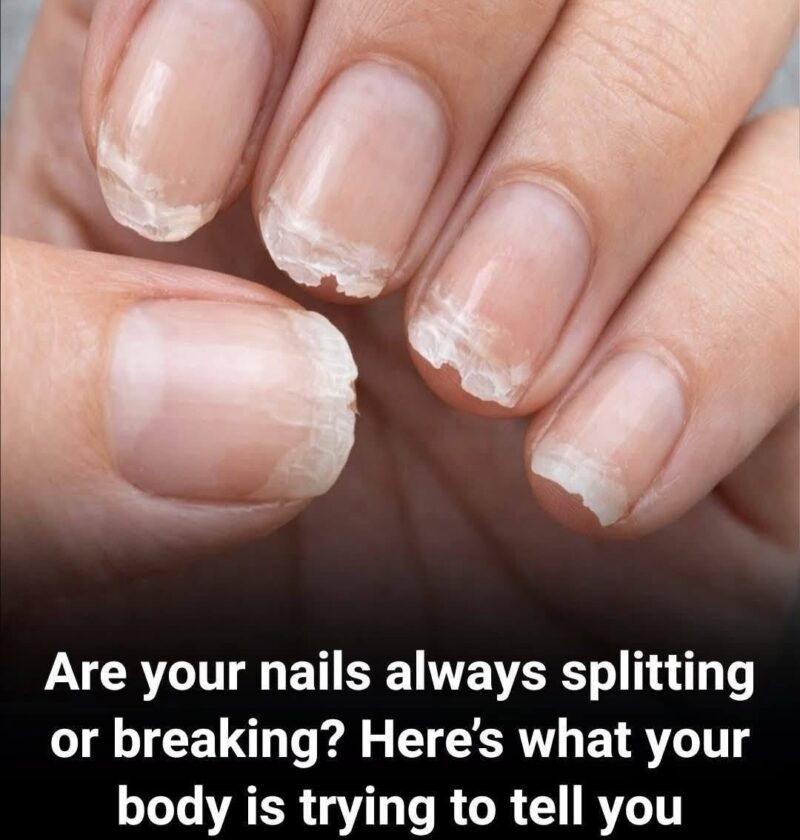
Frequent hand washing, dishwashing, cleaning products, and nail polish removers can dry out nails and make them split or crack.
2. Aging
Nails naturally become drier and more brittle with age.
3. Nutritional deficiencies
In some cases, brittle nails may be associated with low levels of:
- Iron
- Zinc
- Protein
- Certain B vitamins, including biotin
One condition linked to brittle or spoon-shaped nails is Iron Deficiency Anemia.
4. Thyroid disorders
Brittle nails can occur in people with Hypothyroidism, especially when accompanied by symptoms such as fatigue, dry skin, weight gain, or feeling unusually cold.
5. Skin conditions
Conditions such as Psoriasis and eczema can affect the nails, causing changes in texture, thickness, or strength.
6. Fungal infections
A nail fungal infection can make nails brittle, thickened, discolored, or crumbly.
When to see a healthcare professional
Consider medical evaluation if:
- Nail changes are sudden or severe.
- Only one nail is affected without an obvious injury.
- You also have fatigue, hair loss, weight changes, or other symptoms.
- Nails become discolored, thickened, painful, or detached.
Tips for healthier nails
- Wear gloves when cleaning or washing dishes.
- Moisturize hands and nails regularly.
- Avoid excessive use of harsh nail products.
- Eat a balanced diet with adequate protein, iron, and other nutrients.
- Keep nails trimmed to reduce splitting and snagging.
Brittle nails are usually not a sign of a serious illness by themselves, but persistent nail changes can provide clues about overall health and may be worth discussing with a healthcare professional if they don’t improve.