Nails can develop lines, ridges, grooves, or discolorations for many harmless reasons — aging, minor trauma, dehydration, or cosmetic damage. But some nail changes can also signal nutritional deficiencies, skin disorders, infections, or systemic illness. Here’s a practical guide to the most common nail lines and what they may indicate.
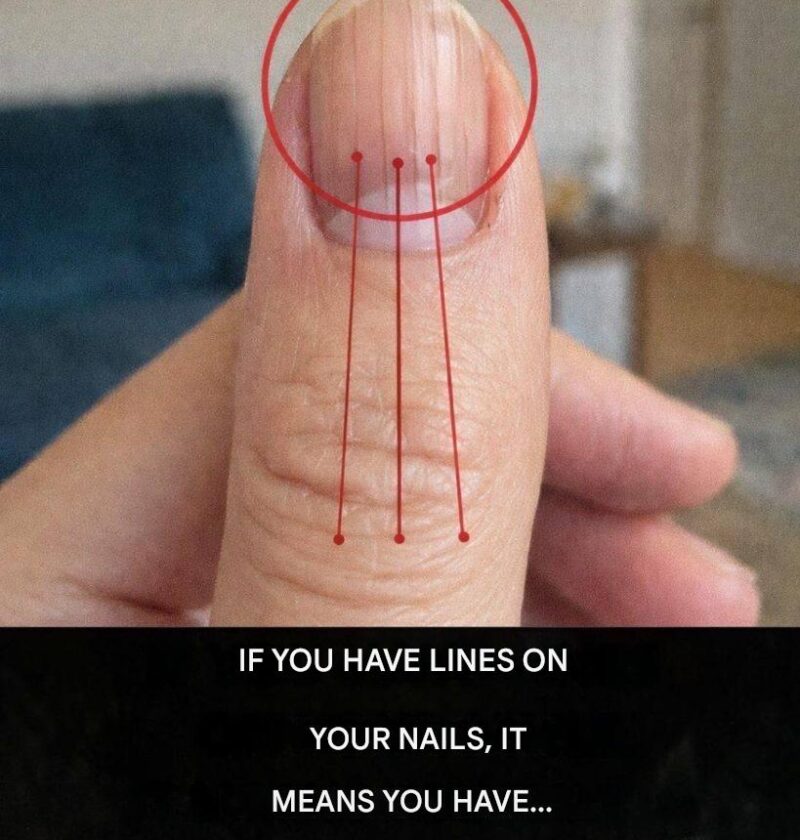
Vertical Ridges (Longitudinal Ridges)
These run from the cuticle to the tip of the nail.
- Very common with aging
- Often harmless
- Can become more noticeable with dry nails
Possible associations:
- Iron deficiency
- Vitamin B12 deficiency
- Rheumatoid Arthritis in some cases
When to check with a doctor:
- Sudden appearance
- Deep or painful ridges
- Accompanied by brittle nails, fatigue, or hair loss
Horizontal Lines or Grooves (Beau’s Lines)
These run across the nail from side to side and can appear after nail growth temporarily stops.
Common causes:
- High fever
- Major illness
- Surgery
- Severe stress
- Nail injury
Associated conditions can include:
- COVID-19
- Diabetes
- Zinc deficiency
The deeper the groove, the more significant the interruption in nail growth may have been.
White Horizontal Lines (Muehrcke’s Lines)
These are pale paired white lines that usually do not move as the nail grows.
Possible causes:
- Low blood protein (especially low albumin)
- Liver disease
- Kidney disease
- Chemotherapy side effects
Medical evaluation is worthwhile if they appear on multiple nails.
Dark Vertical Lines (Melanonychia)
Brown or black streaks running vertically can occur naturally, especially in darker skin tones.
Potential causes:
- Benign pigment changes
- Certain medications
- Trauma
But a new or changing dark streak can rarely indicate:
- Melanoma under the nail
Seek prompt medical attention if:
- The stripe widens
- Has irregular borders
- Extends onto surrounding skin
- Appears on only one nail suddenly
Tiny White Lines or Spots
Usually caused by minor nail trauma, not calcium deficiency (a common myth).
Possible triggers:
- Bumping the nail
- Manicures
- Nail biting
They typically grow out naturally.
Spoon-Shaped Nails (Koilonychia)
Nails curve upward like a spoon.
Possible causes:
- Iron deficiency anemia
- Thyroid disease
- Excessive chemical exposure
This finding deserves medical evaluation, especially if accompanied by fatigue or shortness of breath.
Pitting or Small Dents
Tiny depressions in the nail surface may be linked to:
- Psoriasis
- Eczema
- Autoimmune conditions
Clubbing
Fingertips enlarge and nails curve downward.
Possible associations:
- Chronic lung disease
- Heart disease
- Inflammatory bowel disease
Clubbing should always be medically assessed.
When Nail Changes Need Medical Attention
See a healthcare professional if you notice:
- Sudden dark streaks
- Painful nail changes
- Nail separation
- Bleeding
- Changes affecting many nails
- Nail changes with fatigue, weight loss, fever, or breathing problems
Nails grow slowly, so changes often reflect events or illnesses from weeks or months earlier. They can provide useful clues, but they are not enough alone to diagnose a condition.