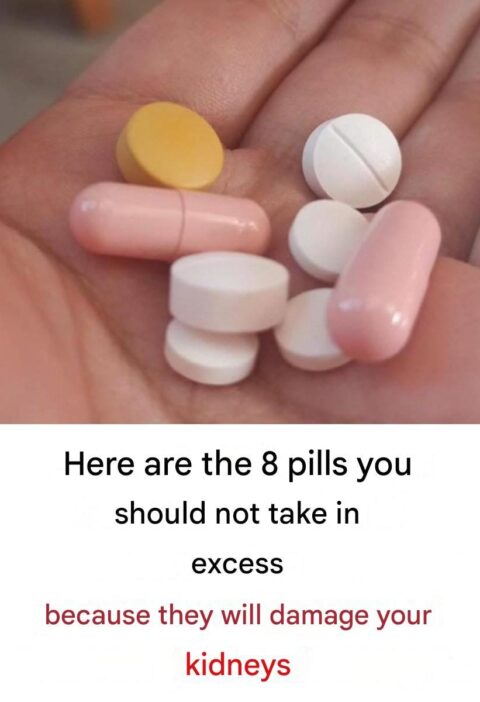
That headline is again overly dramatic. There is no universal list of “8 pills you should never take”. However, it is true that certain commonly used medications can harm the kidneys if overused, taken long-term, or used in high-risk people (elderly, dehydrated, kidney disease, etc.).
Your kidneys filter drugs from the blood, so some medicines can stress them.
⚠️ Medicines most associated with kidney risk
1. Painkillers (NSAIDs)
- Ibuprofen
- Naproxen
Why risk happens:
- Reduce blood flow to kidneys
- Can cause kidney injury with long-term or high-dose use
- Risk increases with dehydration or age
2. Aspirin (high-dose use)
- Aspirin
Important note:
- Low-dose aspirin (for heart protection) is usually safe under medical guidance
- High doses can stress kidneys
3. Certain antibiotics
Some antibiotics can affect kidney function, especially in high doses or existing kidney disease:
- Aminoglycosides (e.g., gentamicin)
- Some older IV antibiotics
4. Blood pressure medicines (in specific situations)
- ACE inhibitors / ARBs (can be protective long-term but risky in dehydration or kidney artery issues)
Example:
- Lisinopril
5. Diuretics (“water pills”)
- Furosemide
Why risk happens:
- Dehydration can strain kidneys
- Electrolyte imbalance if misused
6. Contrast dyes used in scans
- Not a pill, but important
- Can temporarily reduce kidney function in vulnerable patients
7. Some heart and anti-inflammatory combinations
Risk increases when multiple drugs are combined (for example NSAIDs + diuretics + ACE inhibitors — sometimes called the “triple whammy”).
🧠 Key truth doctors emphasize
These medications are not “forbidden” or automatically dangerous. They are:
- Safe when used correctly
- Risky when misused, overused, or taken without monitoring
Millions of people take them safely every day.
🚨 Higher risk if you have:
- Chronic kidney disease
- Diabetes
- High blood pressure
- Older age
- Dehydration or poor fluid intake
🧾 Bottom line