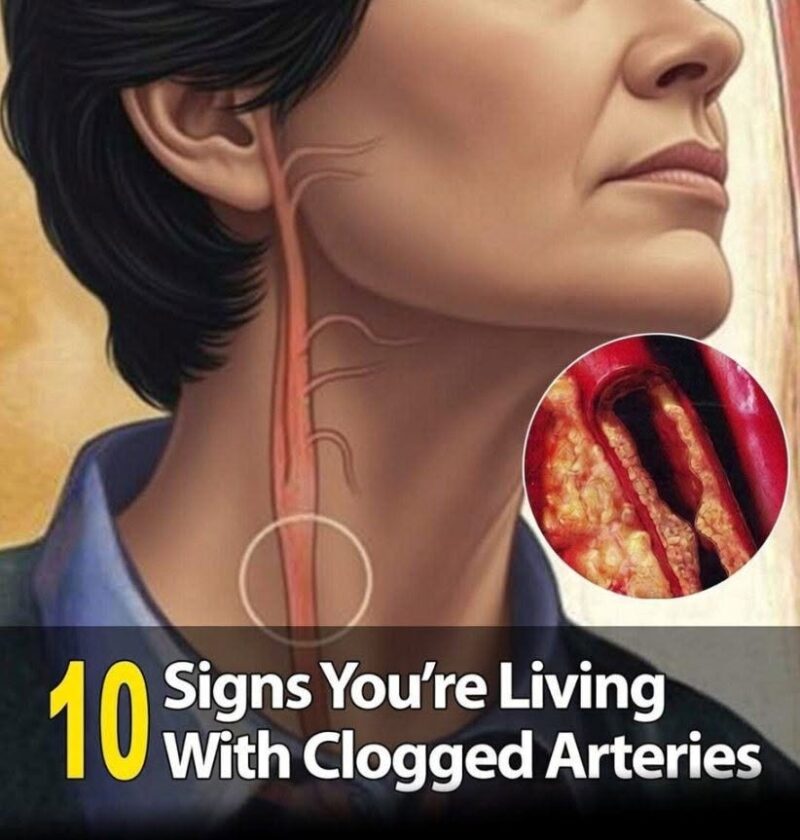
Blocked or narrowed arteries (often due to atherosclerosis) can lead to serious conditions like coronary artery disease or stroke. The tricky part is that early warning signs can be subtle—or even absent—until things become serious.
Here are 10 indicators that may suggest blocked arteries, depending on which part of the body is affected:
1. Chest pain or pressure (angina)
A squeezing, heaviness, or tight feeling in the chest, especially during activity or stress. This is one of the most important warning signs of reduced blood flow to the heart.
2. Shortness of breath
Feeling unusually breathless during normal activities or mild exertion can suggest the heart isn’t getting enough oxygen-rich blood.
3. Fatigue without clear reason
Persistent tiredness, especially if it’s new or worsening, can happen when the heart works harder due to narrowed arteries.
4. Pain in legs while walking (claudication)
Cramping or aching in the calves, thighs, or hips during walking that improves with rest may point to peripheral artery disease.
5. Cold hands or feet
Reduced circulation can make extremities feel unusually cold compared to the rest of the body.
6. Numbness or weakness on one side of the body
This may suggest reduced blood flow to the brain and could be a warning sign of a transient ischemic attack (TIA) or stroke risk.
7. Dizziness or lightheadedness
Poor circulation to the brain can sometimes cause balance issues or faint feelings.
8. Slow-healing wounds
Cuts or sores—especially on legs or feet—that heal slowly may indicate poor blood supply.
9. Erectile dysfunction (in men)
This can be an early sign of vascular problems, as penile arteries are small and affected early by atherosclerosis.
10. Jaw, neck, or arm discomfort
Pain or pressure that radiates from the chest to the jaw, shoulder, or left arm can be a heart-related symptom, especially in men and women during heart ischemia.
Important note
These symptoms do not automatically mean blocked arteries, but they are worth medical evaluation—especially if they are new, worsening, or occur with exertion.
If someone has chest pain with sweating, nausea, or severe shortness of breath, that should be treated as an emergency.
If you want, I can also explain:
- how blocked arteries are diagnosed
- reversible vs irreversible risk factors
- or how lifestyle changes actually help reduce plaque progression