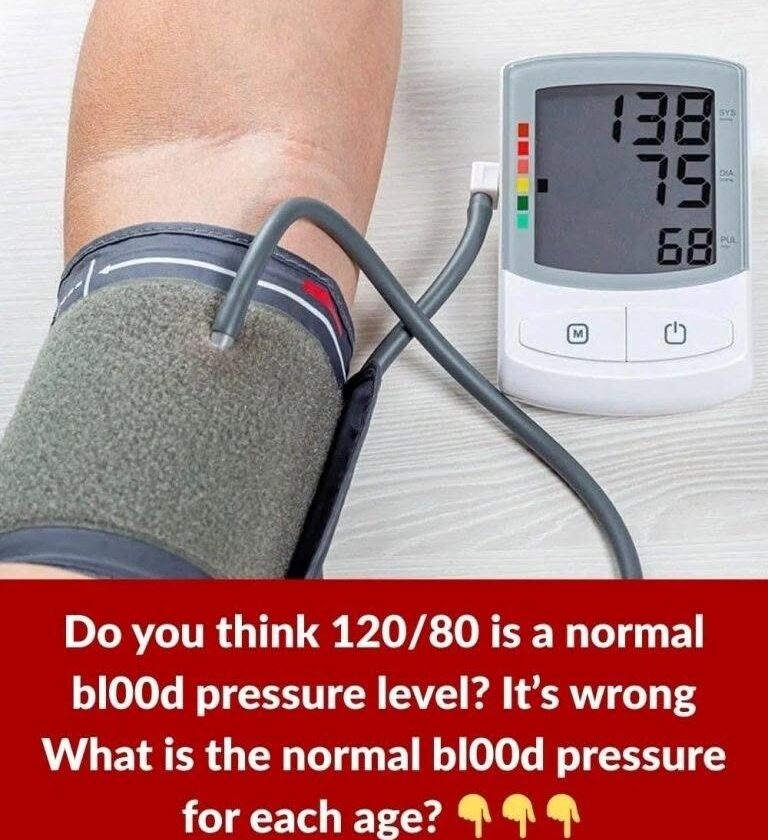
There isn’t a completely separate “normal blood pressure for every age,” but blood pressure does tend to change slightly across life. Modern guidelines mostly use a single standard for adults, while children have age-based percentiles.
Here’s a clear breakdown:
🧒 Children (approximate normal ranges)
Blood pressure in kids depends on age, height, and sex, but typical averages:
- Newborns (0–1 month): ~60–90 / 20–60 mmHg
- Infants (1–12 months): ~80–100 / 50–65
- Toddlers (1–3 years): ~90–105 / 55–70
- School-age (4–12 years): ~95–110 / 60–75
Doctors usually don’t use one fixed number—they compare to percentile charts.
🧑 Teens (13–17 years)
- Typical: ~110–120 / 65–80 mmHg
- High blood pressure is generally considered:
- ≥120/80 (depending on age/height percentiles)
🧑🦱 Adults (18–59 years)
- Normal: less than 120/80 mmHg
- Elevated: 120–129 / less than 80
- High (Stage 1): 130–139 / 80–89
- High (Stage 2): ≥140 / ≥90
👴 Older adults (60+ years)
- Ideal still: <120/80 mmHg (if tolerated)
- Many guidelines accept slightly higher targets depending on health:
- Often up to 130–139 systolic may be acceptable in some older patients
- But ≥140/90 is generally considered hypertension
⚠️ Important points
- A “perfect number” varies by person (diabetes, kidney disease, heart disease, etc.)
- One reading is not enough—BP should be measured multiple times
- Symptoms matter more than numbers alone in emergencies
If you want, I can also tell you:
- what BP is considered dangerous (low vs high emergency levels)
- how to measure it correctly at home
- or how to naturally bring it down if it’s borderline high