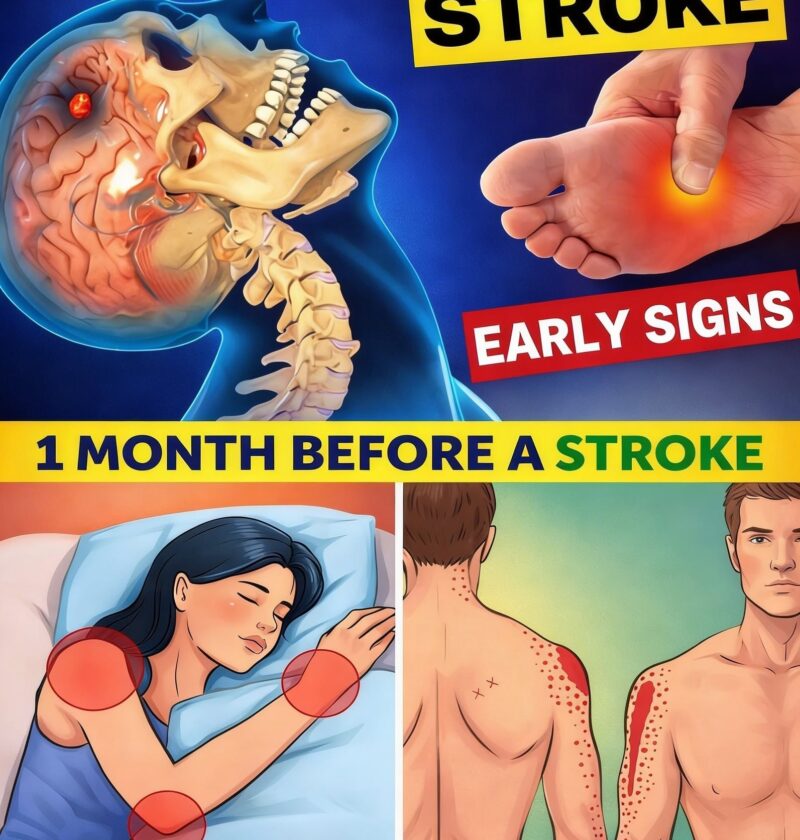
The idea that there are “8 warning signs of stroke one month before” is misleading.
A stroke usually happens suddenly, but in some cases people may experience a transient ischemic attack (TIA) (“mini-stroke”) days, weeks, or months earlier. However, there is no reliable fixed 1-month warning pattern.
Here’s what actually matters:
🧠 Stroke (medical reality)
Stroke happens when blood flow to part of the brain is blocked or a blood vessel bursts.
Sometimes a TIA occurs first—this is a temporary blockage that resolves but is a serious warning sign.
⚠️ Real warning signs (can occur suddenly or with TIA)
Use the FAST rule:
- F – Face drooping (one side of face weak or uneven smile)
- A – Arm weakness (can’t raise one arm properly)
- S – Speech trouble (slurred or confused speech)
- T – Time to act immediately
Other possible signs:
- Sudden vision loss or blurred vision
- Sudden severe headache with no clear cause
- Dizziness, loss of balance, or coordination problems
- Numbness or weakness on one side of the body
- Confusion or trouble understanding speech
If these happen—even briefly—they are emergency warning signs, not “wait and see” symptoms.
🛡️ 9 real ways to reduce stroke risk
- Control blood pressure (most important factor)
- Manage diabetes if present
- Keep cholesterol in a healthy range
- Don’t smoke or use tobacco
- Exercise regularly (even brisk walking helps)
- Maintain healthy body weight
- Eat more fruits, vegetables, and whole grains
- Limit salt, sugar, and ultra-processed foods
- Treat heart conditions like atrial fibrillation if diagnosed
🚨 Key takeaway
There is no guaranteed “one-month warning list.” Stroke prevention is about long-term risk control, and sudden symptoms should always be treated as urgent.
If you want, I can also explain how to tell the difference between a stroke, migraine, and panic attack—they can look surprisingly similar at first.