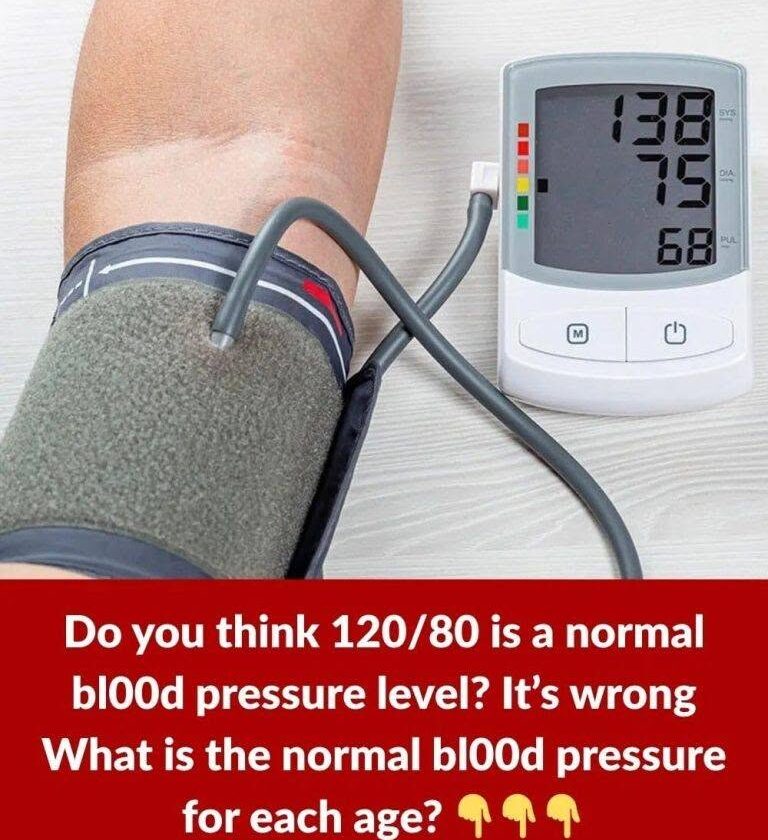
There isn’t a different “normal blood pressure for every exact age” in medical guidelines. Instead, doctors mostly use one healthy adult target, with small differences for children and older adults.
Blood pressure is written like: systolic / diastolic (example: 120/80 mmHg).
🩺 Normal blood pressure (adults)
For most adults (age ~18+), the standard is:
- Normal: less than 120/80 mmHg
- Elevated: 120–129 / less than 80
- High blood pressure (Hypertension): 130/80 or higher Hypertension
👶 Children & teens (general ranges)
Blood pressure in children depends on age, height, and sex, so doctors use percentiles rather than one fixed number. But typical averages:
- Newborns: ~60–90 / 20–60
- Infants (1–12 months): ~80–100 / 50–65
- Toddlers (1–2 years): ~90–105 / 55–70
- School age (6–12 years): ~95–110 / 60–75
- Teens (13–17 years): ~105–120 / 65–80 (often similar to adults)
👵 Older adults
- There is no higher “normal” allowed just because of age
- Many healthy older adults still aim for:
- Under 120–130 / under 80
However, doctors may sometimes accept slightly higher readings depending on:
- Frailty
- Dizziness risk
- Other medical conditions
🧠 Key idea (important)
Blood pressure is considered healthy when:
- It’s not consistently too high
- It doesn’t cause symptoms or organ damage
Age changes risk, not the ideal target.
🚨 When it’s concerning
- 140/90 or higher repeatedly → likely hypertension
- 90/60 or lower with symptoms (dizziness, fainting) → may be low blood pressure issue
Bottom line
- Best universal target for most people: around 120/80 or lower
- Children vary by growth charts
- Older adults don’t get a “new normal,” but treatment goals may be individualized
If you want, I can give you a simple chart showing danger zones vs safe zones or help you interpret a specific BP reading.