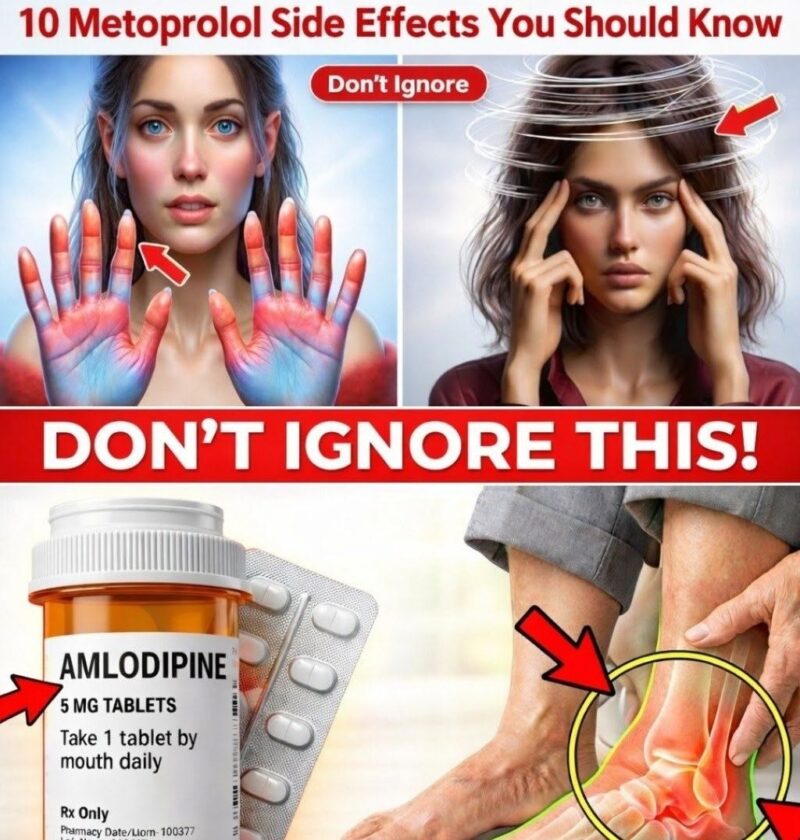
That headline is designed to scare you, not inform you. Metoprolol is a widely used, well-studied heart medication, and doctors routinely discuss its side effects with patients—they’re not “hoping you don’t discover” anything.
Let’s break it down clearly.
💊 What metoprolol is
Metoprolol
It works by slowing the heart rate and reducing blood pressure, which lowers strain on the heart.
⚠️ Common (expected) side effects
These are well-known and usually mild:
- Fatigue or tiredness
- Dizziness, especially when standing up
- Slow heart rate (bradycardia)
- Cold hands and feet
- Mild shortness of breath during exertion
- Sleep disturbances or vivid dreams
⚠️ Less common but important side effects
- Low blood pressure
- Worsening asthma symptoms (in sensitive people)
- Depressed mood or low energy in some patients
- Sexual dysfunction
🚨 Rare but serious effects
These are uncommon but require medical attention:
- Very slow heart rate
- Severe low blood pressure
- Worsening heart failure symptoms (in certain cases)
- Severe breathing difficulty in people with lung disease
🧠 Important reality check
Online lists often exaggerate side effects without context. In reality:
- Most people tolerate metoprolol well
- Doctors prescribe it because its benefits (preventing heart attack, stroke, and controlling rhythm) are significant
- Side effects are usually dose-related and manageable
⚖️ Bottom line
Metoprolol is a standard, evidence-based cardiovascular medication. It does have side effects, but they are well-known, monitored, and usually manageable—not hidden secrets.
If you want, I can explain how to tell whether symptoms you feel are normal adjustment effects or a sign you should contact your doctor—that’s often what people are really worried about.