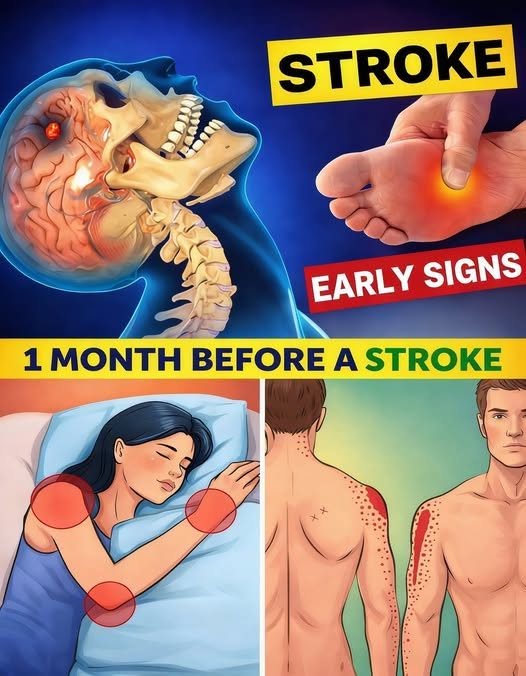
The idea of “stroke warning signs one month before” is partly based on a real medical condition, but it’s often exaggerated online.
A full Stroke usually happens suddenly, but some people experience early warning episodes called a Transient Ischemic Attack (TIA)—sometimes days or weeks before a major stroke.
A TIA is like a “mini-stroke” where blood flow to the brain is briefly blocked and then restored.
⚠️ 8 warning signs that may appear before a stroke
These may come and go (especially in a TIA):
- Sudden weakness or numbness on one side of the body
- Temporary slurred speech or trouble speaking
- Sudden confusion or difficulty understanding others
- Brief vision loss or blurred vision in one eye
- Repeated dizziness or loss of balance
- Sudden severe headache with no clear cause
- Tingling or “pins and needles” on one side
- Trouble walking or poor coordination
👉 Even if these symptoms disappear, they are a medical emergency warning sign, not something to ignore.
🛑 9 effective ways to prevent stroke
Stroke prevention focuses on protecting blood vessels and brain circulation:
- Control blood pressure (most important factor)
- Manage diabetes properly if present
- Reduce cholesterol levels (diet or medication if needed)
- Stop smoking completely
- Exercise regularly (walking, cycling, light cardio)
- Eat a heart-healthy diet (less fried food, less salt, more vegetables)
- Maintain a healthy body weight
- Limit alcohol intake
- Get regular medical checkups, especially after age 40
🚨 When to act immediately (FAST rule)
If you notice:
- Face drooping
- Arm weakness
- Speech difficulty
👉 Call emergency help immediately, even if symptoms improve.
🧠 Key truth
There is no guaranteed “1-month early warning list”.
Some people get TIAs, others have no warning at all—so prevention and risk control matter most.
If you want, I can also give you:
- a simple “stroke risk test” you can do at home
- or early warning signs specific to high blood pressure or diabetes (very important for prevention).